
7 min read
August 17, 2026
Ring Road Iceland winter driving: a practical guide
Ring Road Iceland winter driving is a different experience from the summer version, and knowing which parts stay the same helps you plan with confidence. This guide covers road conditions, daylight, closures, tyre requirements, and which vehicles make sense for a winter circuit, so you can decide what’s realistic for your trip before you leave home.
What actually stays the same in winter
Route 1, the Ring Road, remains open year-round. All 1,332 km of it circles the island on paved road, and the road authority (Vegagerðin) works hard to keep it passable through winter. Most services, petrol stations, and accommodation along the route stay open too, though some smaller guesthouses close in the quietest months of January and February.
The scenery is different, not lesser. Waterfalls freeze into sculpted ice walls. Snow covers the lava fields. Northern lights appear on clear nights between September and March. Winter has its own pull, and it’s a legitimate time to drive the Ring Road if you go in with the right expectations.
What changes when you drive in winter
This is the honest part.
Road conditions are variable and can close sections without notice. Wind, drifting snow, or ice can make sections of Route 1 impassable for hours at a time, particularly in the south around Höfn, on the exposed Westfjords connections, and on the northern stretches between Akureyri and Egilsstaðir. Road closures are posted in real time at umferdin.is and you should check it every morning before driving.
Daylight hours shrink dramatically. In December, Reykjavik gets around four hours of usable daylight. By February it’s closer to eight. This isn’t a reason to stay home, but it changes how you plan your driving day. Long drives at night in icy conditions are not wise for anyone, let alone first-timers.
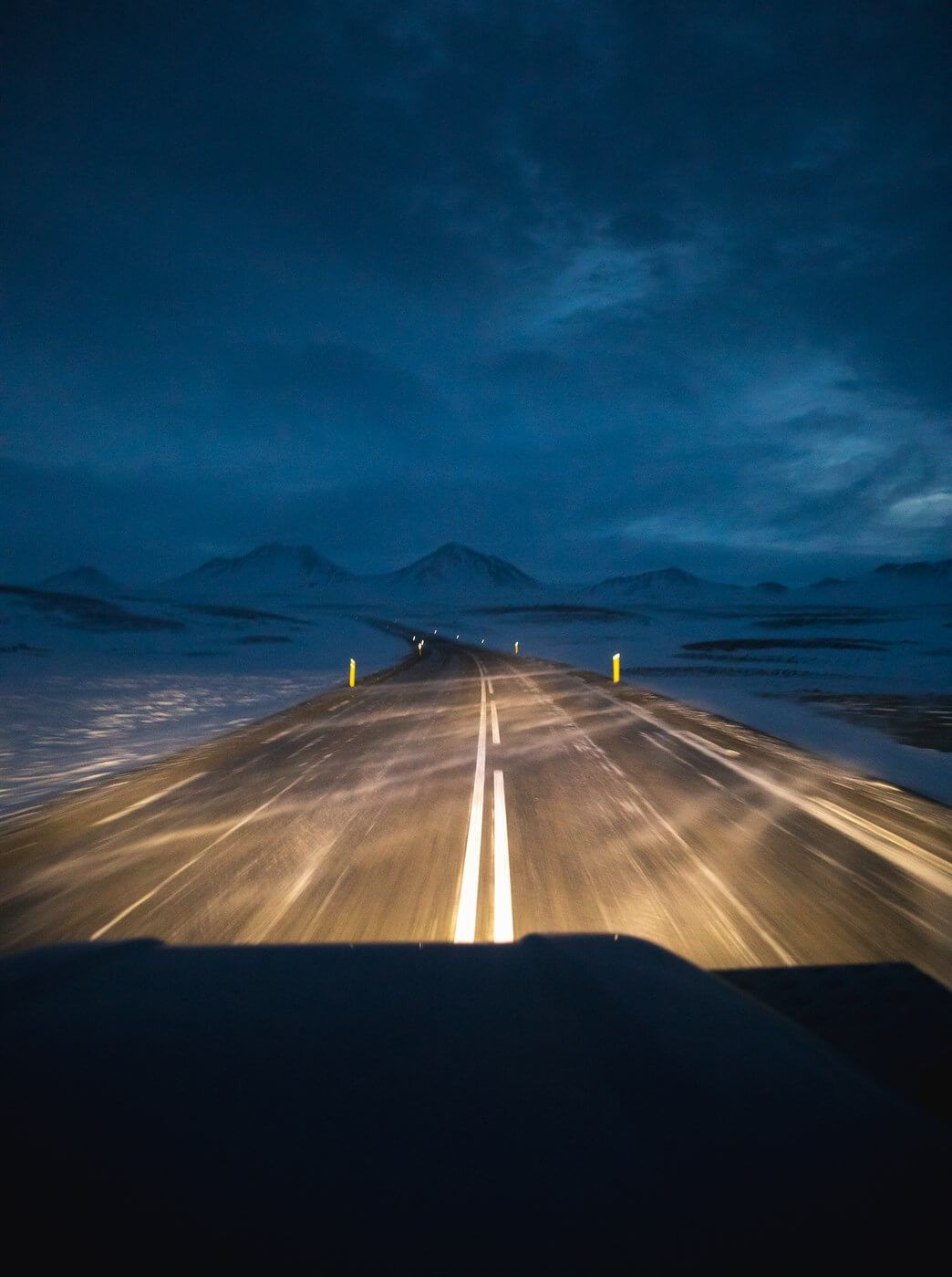
Winter daylight fades early; plan your driving hours around it.
Driving pace slows down. Summer visitors cover 300 km days with ease. In winter, ice, short days, and weather pauses mean 150–200 km is a more comfortable daily target on much of the route.
Studded tyres are standard. From 1 November to 14 April, the minimum legal tyre tread depth in Iceland is 3 mm, compared with 1.6 mm during the rest of the year, and studded tyres are permitted during this window. Reputable rental companies supply studded tyres during this window as standard equipment. Our winter-ready fleet at Zero Car Rental includes studded tyres in season, included in the price with no add-on fees. You can read more about winter tyres in Iceland to understand exactly what to expect.
F-roads are closed in winter
F-roads, the highland interior tracks, are closed from late autumn until late spring, sometimes as late as June depending on snow depth. If you’re planning the Ring Road in winter, you are planning a coastal circuit. The highland shortcuts (F35 Kjölur, F208 Landmannalaugar, F26 Sprengisandur) are not options.
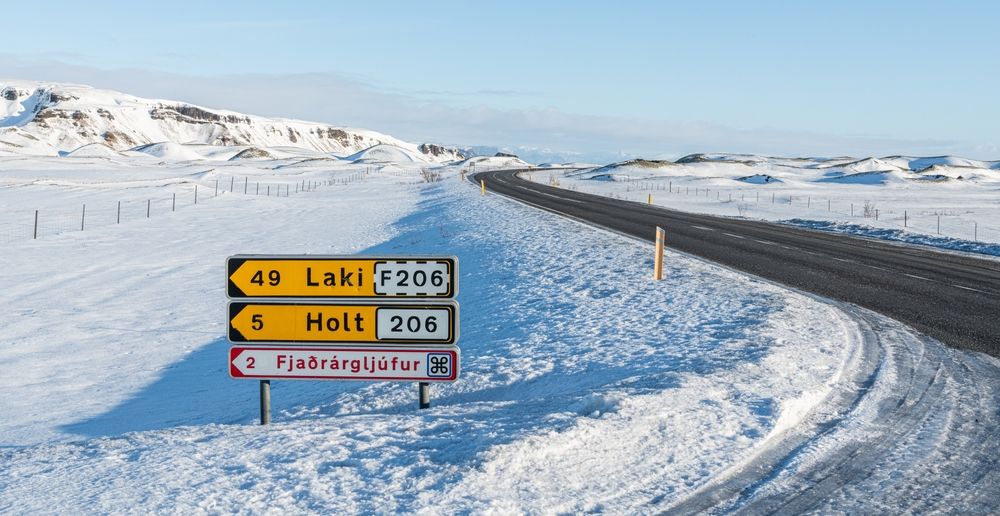
F-road signage in winter: the F206 to Laki stays closed until spring.
This matters mainly for itinerary planning, not safety. The Ring Road itself doesn’t require F-road access. But if a travel blog or itinerary suggests cutting through the interior in winter, treat that as a red flag. Full detail on which roads require what vehicle and when they open is covered in our guide on F-roads and river crossings in Iceland.
Which car suits a winter Ring Road trip
You don’t automatically need a massive 4x4. The Ring Road is a paved highway, and a well-equipped AWD or 4WD vehicle with studded tyres handles it well in most conditions. That said, ground clearance matters when snow accumulates on parking areas or access tracks to waterfalls and viewpoints.
Here’s a practical breakdown by vehicle type:
| Vehicle type | Ring Road in winter | Off-road stops (snow-covered) | Best for |
| Small 2WD (e.g. economy hatchback) | Possible in mild conditions, limited | Not recommended | Budget travellers on clear-weather trips only |
| Compact AWD crossover (e.g. Dacia Duster, Suzuki Vitara) | Comfortable, well-suited | Good enough for most stops | Most Ring Road travellers |
| Mid-size 4x4 SUV (e.g. Kia Sportage, Kia Sorento) | Confident, flexible | Handles most winter access tracks | Couples or small families wanting comfort |
| Large 4x4 (e.g. Toyota Land Cruiser) | Excellent, more than needed for Route 1 | Very capable | Groups needing space or remote access |
For a standard Ring Road winter trip, a compact to mid-size AWD with studded tyres is the sweet spot for most people. If you want to explore more remote areas or side roads in snow, step up to a proper 4x4.
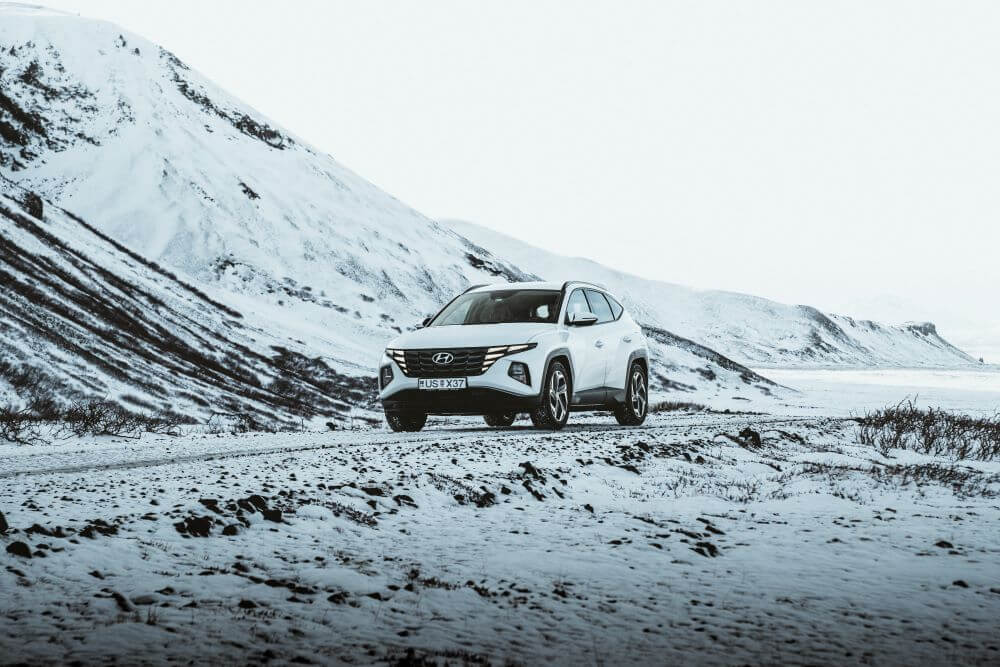
A mid-size SUV from our fleet on a snow-covered access track.
Our guide on choosing the right rental car in Iceland walks through the decision in more detail if you’re weighing options.
Daylight by month on the Ring Road
Planning your driving hours around available daylight is one of the most underrated parts of winter Ring Road prep.
| Month | Daylight hours (approx.) | Driving day reality |
| November | 5–7 hours | Short days, aim for 1–2 stops max |
| December | 4–5 hours | Darkest month, drive slowly and flexibly |
| January | 5–7 hours | Gradually improving, still limited |
| February | 7–9 hours | More manageable, aurora season still strong |
| March | 10–12 hours | Excellent: winter conditions + real daylight |
March is genuinely one of the best months for the Ring Road. You get a reasonable driving window, snow is still on the mountains, the aurora season hasn’t fully closed, and crowds are lighter than summer.
If you are starting the winter season at its beginning, our guide to renting a car in Iceland in November covers the first month of winter driving conditions.
Road safety resources you need bookmarked
Before every drive in winter, check these two sources:
- Vegagerðin / umferdin.is for real-time road status and closures
- Veður / vedur.is for weather forecasts and storm alerts
Safetravel.is also collects safety warnings specific to tourists and is worth a look before heading into less-familiar stretches.
No rental car, no tyre choice, and no local advice replaces a 60-second check on road conditions before you leave each morning.
What to do if conditions turn bad
Pull over, wait, and reassess. Iceland’s weather moves through quickly. A closed road might open within two hours. Trying to push through in a blizzard, or driving on an orange or red risk-rated road, is never worth it.
Our 24/7 roadside assistance is available for customers throughout the trip if you need it. It’s covered in detail on our roadside assistance page, including how to reach us from the road.
Is full insurance worth it in winter
Yes, straightforwardly. Winter conditions increase the odds of an incident: stone chips from gritted roads, minor skids, or damage from unexpected ice. If you’re driving in a season with more risk, reducing your financial exposure makes sense.
Our online bookings include CDW, SCDW, TP, GP, and SAAP coverage with zero excess and no deposit held on your card, though coverage inclusions can vary by booking type and vehicle. Check our insurance policy page for the full breakdown before booking, so you know exactly what your package covers.
The Ring Road in winter: a realistic summary
The Ring Road is driveable in winter by first-time visitors who prepare properly. Roads stay open, the scenery is extraordinary, and with the right vehicle and a flexible mindset, the trip works well. The adjustments are real: shorter driving days, winter-ready tyres, no highland routes, and daily condition checks. None of those are reasons to stay home, they’re reasons to plan carefully and leave buffer time in your itinerary.
You can book right now
Ring Road winter driving FAQ
Yes, with preparation. Route 1 is a paved highway kept open year-round. The key adjustments are using a winter-ready vehicle with studded tyres, keeping driving days short to match available daylight, and checking umferdin.is and vedur.is each morning. Most first-time visitors manage the route comfortably when they build flexibility into their itinerary.
Not strictly, but AWD is strongly recommended. A compact AWD crossover with studded tyres handles the Ring Road in winter well for most conditions. A 2WD vehicle is technically possible in mild weather but gives you very little margin if conditions deteriorate. If you plan to explore side roads or access viewpoints off the main highway, a proper 4x4 gives you more flexibility.
Plan for at least 10–14 days. In summer, some travellers rush the Ring Road in 7 days, but in winter the shorter daylight window, slower driving speeds on icy sections, and weather-related pauses make 10 days a realistic minimum for a comfortable circuit without racing.
Route 1 itself is rarely closed for extended periods, but sections can close temporarily due to storm conditions or ice, particularly around the south coast, the East Fjords, and exposed northern stretches. F-roads and highland routes are closed throughout winter. Check umferdin.is daily for current status.
From 1 November to 14 April, the minimum legal tyre tread depth in Iceland is 3 mm, compared with 1.6 mm during the rest of the year, and studded tyres are permitted during this window. Reputable Icelandic rental companies supply studded tyres during this period as standard equipment. At Zero Car Rental, studded winter tyres are included during the winter season at no extra charge, though we recommend confirming this applies to your specific booking when you complete online check-in.