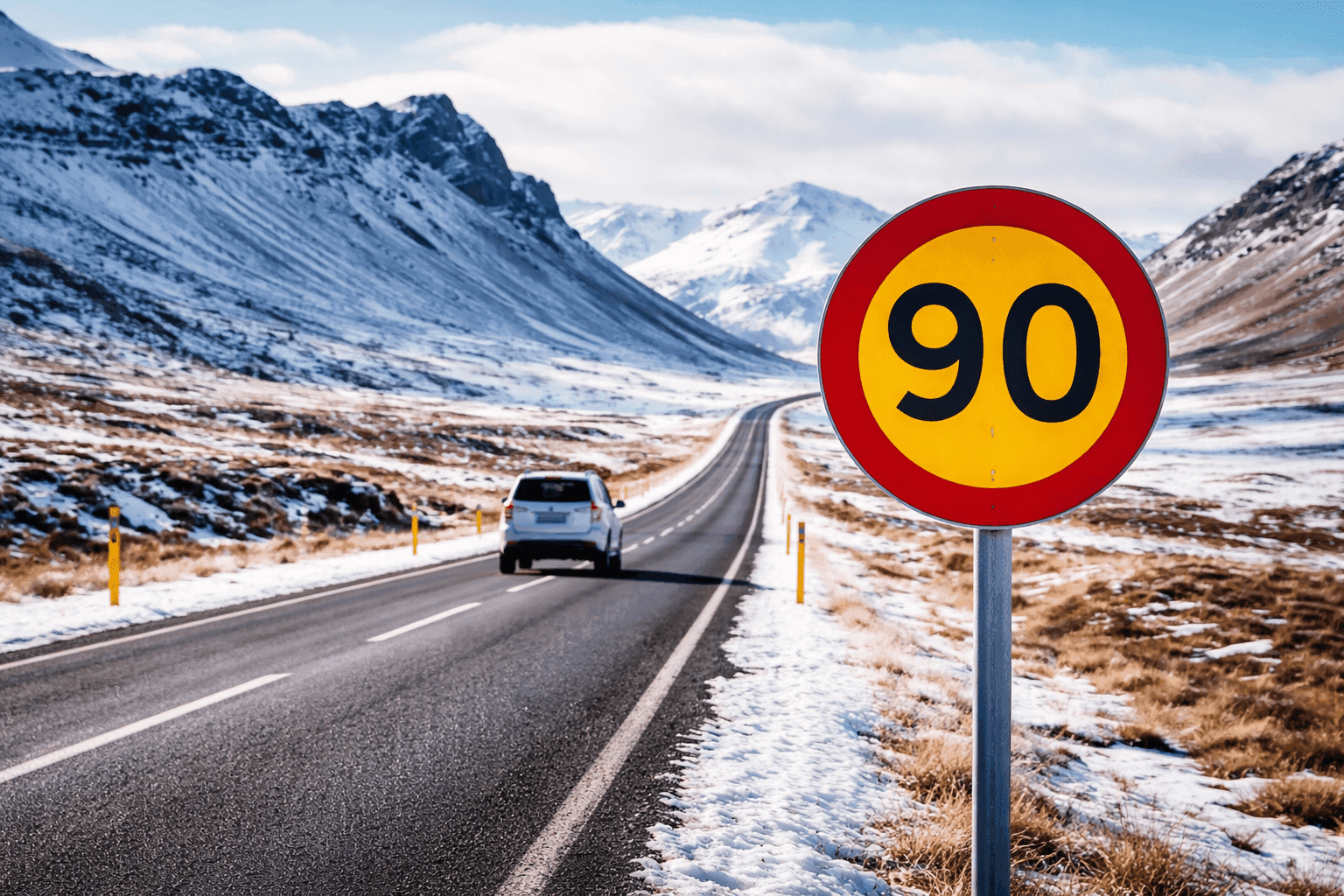
Driving in Iceland

Stories

Driving from Keflavik Airport to Reykjavik: Route, Tips and What to Expect

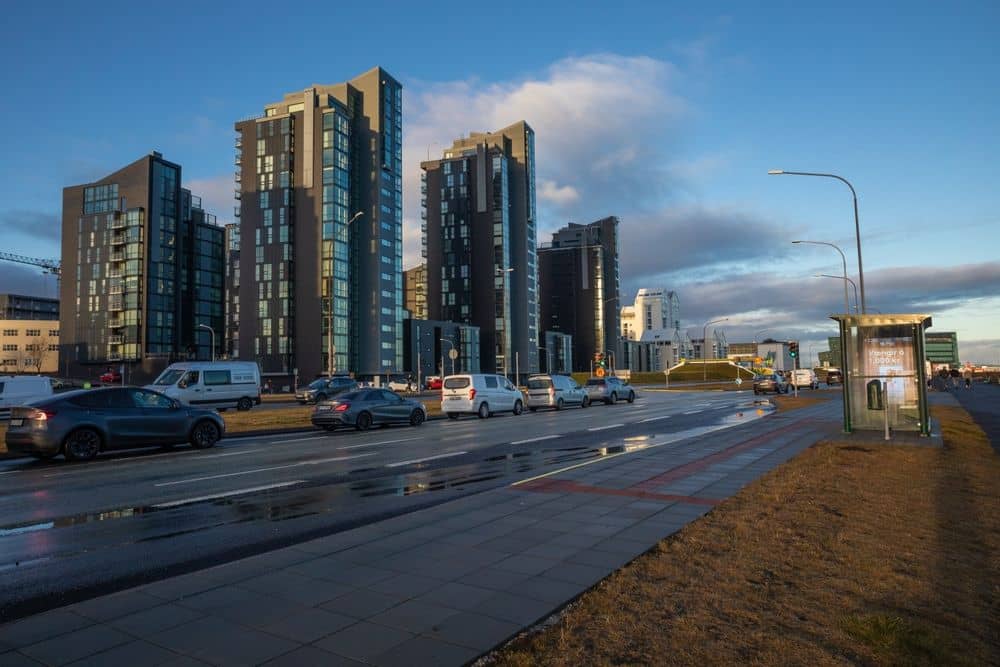
The drive from Keflavik Airport to Reykjavik is short, but it is one of the most important drives of your entire trip. It is your first real introduction to Iceland, not just as a destination, but as a place you will actively navigate. After landing, collecting your luggage, and picking up your rental car, this is the moment where your trip shifts from planning to reality. You are suddenly on Icelandic roads, surrounded by a landscape that looks nothing like what most travelers are used to. This guide explains exactly what to expect, how to drive the route confidently, and how to avoid the small mistakes that can turn a simple drive into a stressful start. If this is your first time driving in Iceland, it is worth reading our [Driving in Iceland Guide](https://www.zerocar.is/blog/driving-in-iceland) before you leave the airport. ## How Far Is Keflavik Airport from Reykjavik? Keflavik International Airport is located about 50 kilometers from Reykjavik. In normal conditions, the drive takes around 40 to 50 minutes. That might sound simple, but it is important to factor in your state after arrival. Most travelers are either tired from a flight or adjusting to a new time zone. Even a short drive requires more attention than expected in that state. The distance is short, but the transition into a completely different driving environment makes it feel more significant than a typical airport transfer. ![Reykjavík city traffic with modern apartments under autumn skies in October.](https://zerocar.b-cdn.net/shutterstock_2352304015_5487364206.jpg) ## Best Ways to Get from Keflavik Airport to Reykjavik There are several ways to travel from Keflavik Airport to Reykjavik, and the right choice depends on your budget, timing, and how much flexibility you want at the start of your trip. Here is a clear comparison of the main options: Transport OptionPrice (USD)Travel TimeConvenienceBest ForRental Car$70–$200/day40–50 minHighFlexibility, road trips, full controlAirport Shuttle Bus$25–$4045–60 minMediumBudget travelers, solo visitorsPrivate Transfer$160–$25040–50 minVery HighGroups, comfort, direct hotel drop-offTaxi$180–$30040–50 minHighLate arrivals, convenience over costPublic Bus$15–$2560–90 minLowBudget travelers with flexible timing ### Which Option Is Best? If you want flexibility and plan to explore beyond Reykjavik, renting a car is the best option. It allows you to start your trip immediately and avoid transfers or waiting times. If you are staying in Reykjavik and want a simple transfer, airport shuttle buses are the most common and cost-effective choice. Taxis and private transfers offer convenience, but they are significantly more expensive and do not provide any flexibility beyond the initial journey. **Practical insight:** Many travelers who skip renting a car at the airport end up renting one later. Starting with a rental car often saves both time and money. ## The Route from Keflavik to Reykjavik The drive follows Route 41, also known as Reykjanesbraut. It is a direct connection between the airport and the capital, and you will stay on this road for almost the entire journey. The road is wide, paved, and well maintained. Traffic is usually light, especially compared to most international cities. For long stretches, you will feel like you are driving through open space rather than between destinations. This openness is what catches many drivers off guard. With no trees, no buildings, and long sightlines, it can feel easier than it actually is. That false sense of simplicity is where small mistakes happen, especially when combined with fatigue after a flight. As you approach Reykjavik, the road begins to change. Traffic increases, lanes widen, and you will encounter more exits and merging vehicles. This is the point where you need to shift from relaxed driving to a more focused, city-style awareness. The route itself is simple. Staying attentive is what matters. ![Reykjavik skyline along Faxaflói Bay at sunset, modern towers and colorful waterfront seen from the seawall](https://zerocar.b-cdn.net/shutterstock_1880840806_c8d2a5f613.jpg) ## What the Drive Actually Feels Like This is not a typical airport drive through suburbs or industrial zones. Within minutes of leaving Keflavik, you are surrounded by volcanic terrain shaped by lava flows and moss-covered rock. The landscape feels quiet and minimal. There are no forests, very few buildings, and long stretches where the horizon is completely open. For many travelers, this is the moment Iceland starts to feel real. It can also feel disorienting at first. The scale of the landscape and the lack of familiar visual reference points make distances harder to judge. Things that look close may still be several kilometers away. This is a good place to slow down mentally, not just physically. Let the drive ease you into the rhythm of Iceland rather than rushing through it. ## Should You Stop on the Way? Even though the drive is short, there are a few places worth stopping if you have the time and energy after your flight. ### The Blue Lagoon The Blue Lagoon is located about 20 minutes from the airport and is one of the most common first stops for travelers arriving in Iceland. Stopping here can be a great way to relax after a flight, but it also requires planning. Parking, timing, and bookings can affect how smooth the stop actually feels. [Read the Blue Lagoon parking and driving guide](https://www.zerocar.is/blog/natural-wonders/blue-lagoon-parking-car-rental-guide) ### Reykjanes Peninsula If you are not in a rush, the Reykjanes Peninsula offers a quieter and less crowded introduction to Iceland. The area includes geothermal landscapes, coastal views, and volcanic terrain that many travelers skip entirely. This can be a good option if you want to start your trip slowly rather than heading straight into Reykjavik. ## Driving Conditions on This Route Route 41 is one of the easiest roads in Iceland, but “easy” does not mean effortless. There are still conditions you need to be aware of, especially as a first-time driver. ### Wind The Reykjanes Peninsula is exposed and open, which means wind can affect your car more than you expect. Even moderate wind can push a vehicle slightly within its lane. This is usually manageable, but it requires steady steering and awareness, especially if you are not used to driving in windy conditions. ### Fatigue This is one of the most underestimated risks. Many travelers start this drive immediately after a long flight, often with little sleep. Your reaction time, focus, and awareness are all slightly reduced. Even though the road is simple, this is not the moment to drive aggressively or rush. ### Speed Awareness The speed limit on this route is typically 90 km/h outside urban areas. As you approach Reykjavik, it drops quickly. These transitions happen faster than many drivers expect, and enforcement is strict. [Read the speed limits and fines guide](https://www.zerocar.is/blog/driving-in-iceland/iceland-speed-limits-and-traffic-fines-complete-driving-guide) ## Picking Up Your Rental Car at Keflavik Airport Picking up your rental car at the airport is the most efficient way to start your trip. It allows you to move directly from arrival to driving without needing transfers or waiting. Before leaving the rental lot, take a few minutes to check the car properly. This is one of the simplest ways to avoid problems later. * Inspect the car for existing damage * Take photos if needed * Check lights and indicators * Understand your insurance coverage [Use the full pre-rental checklist](https://www.zerocar.is/blog/driving-in-iceland/what-to-check-before-leaving-the-car-rental-lot) ![Aerial view of keflavik airport in the winter](https://zerocar.b-cdn.net/kef_airport_26c367352f.avif) ## Parking in Reykjavik: What You Need to Know Parking in Reykjavik is straightforward, but it is structured. The city is divided into zones, and each zone has different pricing and rules. Central areas are usually paid during the day, and enforcement is consistent. You will need to either use parking meters or mobile apps to pay. One common mistake is assuming parking is free because it is outside of a major city center. In Reykjavik, that assumption often leads to fines. Always check signage carefully when you park. It takes less than a minute and can save you from unnecessary costs. ## Common Mistakes on This Drive This drive is simple, but small mistakes still happen, mostly because travelers underestimate it. * Driving too fast after a long flight * Not adjusting to wind conditions * Missing speed changes near Reykjavik * Rushing instead of settling into the drive None of these are serious on their own, but they are avoidable with a bit of awareness. ## Final Thoughts The drive from Keflavik Airport to Reykjavik is short, but it is your introduction to Iceland as a driving destination. It is where you adjust to the road, the environment, and the pace of travel. Taking it calmly sets the tone for the rest of your trip. Start your journey with [Zero Car Rental](https://www.zerocar.is/) and focus on the road ahead, not the stress of getting there.

Iceland Speed Limits and Traffic Fines: Complete Driving Guide

If you are planning to drive in Iceland, understanding the country’s speed limits and traffic fines is not optional. It is one of the most important parts of staying safe, protecting your budget, and avoiding stress during your trip. Iceland’s roads can look open and easy at first glance, but conditions change quickly, speed cameras are active, and fines can become expensive fast if you drive carelessly. This guide explains Iceland speed limits, where drivers get caught, how traffic fines work with rental cars, what changes between urban and rural roads, and how to adjust your driving for Icelandic weather and road surfaces. It also links to the most useful Zero Car articles for first-time visitors, winter travellers, and anyone planning a self-drive trip around the country. ## Why speed limits matter so much in Iceland Iceland is not a country where you should treat the posted speed limit as a target. The legal limit is the maximum under good conditions, but local roads often demand slower driving. That matters even more in Iceland because you can move from dry pavement to loose gravel, fog, strong crosswinds, snow, or black ice with very little warning. For a wider overview of local road rules, safety basics, and what foreign drivers should know before setting off, start with our [Driving in Iceland Guide](https://www.zerocar.is/info/driving-in-iceland). It is the best foundation page for anyone renting a car in Iceland for the first time. If you are still deciding whether a self-drive trip is the right fit, our [complete guide to renting a car in Iceland](https://www.zerocar.is/blog/driving-in-iceland/renting-a-car-in-iceland-the-complete-guide-for-first-time-visitors) gives you the bigger picture on route planning, vehicle choice, and what to expect from a first trip. ## What are the speed limits in Iceland? The standard speed limits in Iceland are simple, but you still need to watch local signage carefully because lower limits are common when conditions or road design require them. Road typeTypical speed limitWhat to expectResidential and calm urban streets30 km/hPedestrians, parked cars, local trafficUrban roads and towns50 km/hCrossings, junctions, more traffic movementRural gravel roads80 km/hLoose surfaces, less grip, longer braking distancePaved rural roads90 km/hMain routes such as parts of Route 1 Those numbers sound straightforward, but the real skill is knowing when to drive well below them. On a narrow road with wind, poor visibility, or frost, the safe speed may be much lower than the sign allows. ## Urban speed limits in Iceland Urban limits are usually lower than many visitors expect. In Reykjavik and other towns, you will commonly see 30 km/h and 50 km/h zones, with the lower limit appearing in residential areas, around schools, and in places where pedestrians are likely to cross. This is one of the easiest places for visitors to make mistakes. You may have spent an hour on open roads and then enter a town without slowing down enough. That transition matters. Cameras and enforcement often focus on the exact points where drivers leave faster roads and enter slower urban areas. If your trip includes time in the capital region, our [Reykjavik car hire guide](https://www.zerocar.is/blog/practical-info/car-hire-reykjavik-a-clear-human-guide-for-your-first-trip) is useful for parking, city driving, and simple day-trip planning. ## Rural speed limits in Iceland Outside built-up areas, speed limits are higher, but rural driving in Iceland is where drivers can become too confident. On paved rural roads, the standard limit is usually 90 km/h. On gravel roads, it is usually 80 km/h. That does not mean either speed is always safe. Rural roads in Iceland often include blind hills, one-lane bridges, sharp curves, sheep near the roadside, and sudden weather shifts. In some areas, road edges are narrow and the margin for error is small. A straight section can quickly become a bend, a gravel patch, or a wind-exposed stretch. If you are planning a bigger road trip, our [Ring Road Iceland guide](https://www.zerocar.is/blog/driving-in-iceland/ring-road-iceland-guide) is one of the strongest companion pages for this article because it helps readers understand how distance, fatigue, weather, and route design affect real driving time. ## Why tourists get speeding fines in Iceland Most speeding fines in Iceland are not caused by reckless racing. They usually happen because drivers underestimate how tightly the rules are enforced, miss a change in speed limit, or assume a safe-looking road allows more speed than the sign does. Common situations include: * Entering a town too fast after a long rural drive * Driving at rural speed on gravel without adjusting to surface conditions * Missing a reduced limit near a tunnel, bridge, or built-up area * Trying to make up time between attractions * Overestimating how easy Icelandic roads are in wind, rain, or winter conditions This is also where internal linking matters for SEO and user value. A page about speed limits should not trap the reader on one topic. It should help them solve the full driving problem. That is why it makes sense to also read our [guide to Iceland’s road signs and regulations](https://www.zerocar.is/blog/driving-in-iceland/understanding-iceland-s-road-signs-and-regulations), especially if you are used to driving in a very different road environment. ## Speed cameras in Iceland Iceland uses speed cameras in areas where speeding and accidents are common. That includes some urban approaches, high-risk stretches, and places where drivers do not slow down enough when conditions change. These cameras automatically photograph vehicles that exceed the limit. The important point is not to hunt for cameras. It is to drive in a way that makes cameras irrelevant. If you drive calmly, watch signs, and adapt to conditions, they stop being a concern. Many first-time visitors benefit from reading broader safety guidance alongside this page. Our [year-round driving safety guide](https://www.zerocar.is/blog/driving-in-iceland/mastering-iceland-s-roads-year-round-driving-safety) supports this article well because it expands beyond speed into visibility, weather, surface changes, and practical judgement. ## Average Speed Cameras in Iceland Iceland has recently introduced a new type of traffic enforcement system known as **average speed cameras**. These cameras are designed to improve road safety and reduce speeding over longer stretches of road, rather than at a single fixed point. Unlike traditional speed cameras, which measure your speed at one specific location, average speed cameras work by calculating how long it takes your vehicle to travel between two points. Based on the distance and travel time, your average speed is calculated. If your average speed exceeds the limit, a fine is issued. ![Average speed camera in Iceland](https://zerocar.b-cdn.net/average_speed_camera_iceland_5204d99d38.jpg) ### How Average Speed Cameras Work * Two cameras are placed at a fixed distance apart * Your vehicle is recorded at both points * The system calculates how long the journey took * Your average speed is determined from this data * If you exceed the speed limit on average, you receive a fine This means slowing down only near a camera is no longer enough. Drivers must maintain a safe and consistent speed throughout the entire monitored section. ### Where Average Speed Cameras Are Located As of now, average speed cameras have been introduced in specific locations in Iceland: * Grindavíkurvegur (Route 43), between the Blue Lagoon and Grindavík on the Reykjanes Peninsula * Norðfjarðargöng tunnel in East Iceland These locations were chosen because of traffic volume and safety concerns. The Reykjanes Peninsula route is especially important for travellers driving between Keflavik Airport and the Blue Lagoon. If you are planning that route, see our [Travel Stories hub](https://www.zerocar.is/blog) for related driving and itinerary content. ### Why Iceland Introduced Average Speed Cameras The goal of average speed cameras is not just to issue fines, but to improve overall road safety. Research from other countries shows strong results when this type of monitoring is introduced. * Fewer drivers exceed speed limits * More consistent driving speeds * Reduced number of accidents * Lower severity of crashes Studies from Norway have shown that average speed monitoring can significantly reduce serious accidents and fatalities on monitored roads. Iceland is now applying similar systems to improve safety on key routes. ### What This Means for Drivers This new system changes how you should approach driving in Iceland. It is no longer enough to slow down only when you see a camera. Instead, you need to maintain a steady and appropriate speed across the entire road section. * Do not accelerate after passing a camera * Keep a consistent speed within the limit * Allow enough travel time so you are not rushing For travellers renting a car, this reinforces the importance of driving calmly and planning your routes properly. If you are unsure about road conditions or route timing, start with our [Driving in Iceland Guide](https://www.zerocar.is/info/driving-in-iceland). ### Will More Average Speed Cameras Be Added? Yes. Icelandic authorities have indicated that more average speed camera zones are likely in the future. Expansion depends on funding and road safety priorities, but the initial rollout suggests this system will become a permanent part of Iceland’s traffic enforcement. For drivers, this means one thing: consistent, safe driving will become even more important across the entire country. ## How Iceland traffic fines work Traffic fines in Iceland are real, enforceable, and not something you can ignore because you are visiting from abroad. If a speed camera records a violation, the fine is sent to the vehicle’s registered owner. With a rental car, that usually means the rental company receives the notice first and then passes the charge to the renter according to the rental agreement. That process is one reason why transparent driving advice matters so much for a rental car brand. People do not just want a vehicle. They want to avoid the avoidable problems that come with not understanding local rules. Official guidance also makes clear that if the notice goes to someone who was not actually driving, the correct driver can be reported to the authorities instead of the wrong person paying it. There is also an official process for paying or objecting to a traffic fine, and a 25% discount applies if the fine is paid within 30 days. ## How much is a speeding fine in Iceland? Fine amounts in Iceland depend on the violation and can change, which is why the safest and most accurate advice is this: do not rely on static fine tables from old blog posts. Use the official [traffic fine calculator](https://island.is/en/traffic-fine-calculator) for current figures if you need the latest amount for a specific offence. From an SEO and trust perspective, that is the correct approach. It is better to send readers to the live official fine calculator than to publish outdated amounts that quietly go stale and hurt credibility. Still, the practical takeaway is simple. Even smaller violations can be expensive, and larger ones become painful fast. The best money-saving strategy is not hunting for loopholes. It is driving responsibly from the start. ## Do rental cars get charged automatically for fines? In practice, the registered owner of the vehicle receives the notice first, which for a rental car is usually the rental company. From there, the charge is handled according to the rental agreement and transferred to the responsible driver. That means visitors should assume that fines will follow them even after they leave Iceland. This also ties directly into planning costs properly. If your audience is budget-conscious, this page should naturally connect to broader travel-cost content. That is why one of the most useful supporting reads here is our [guide to car rental costs in Iceland](https://www.zerocar.is/blog/practical-info/car-rental-iceland-what-costs-are-and-how-to-save). It helps readers budget intelligently and puts fines into the larger cost picture. ## Road conditions can matter more than the legal limit One of the most important things to understand about driving in Iceland is that the road itself often tells you to slow down long before a sign does. Local conditions matter enormously. ### Gravel roads Gravel roads reduce grip and increase braking distance. Stones can shift under the tyres, and the car may feel less stable if you corner too quickly. Even though the standard limit on rural gravel roads may be 80 km/h, that is not always a smart speed. ### Wind Wind is one of the most underestimated hazards in Iceland. Sudden gusts can push a car sideways, especially on exposed routes or when driving a lighter vehicle. If you are fighting the steering wheel, the answer is not confidence. It is less speed. ### Rain, ice, and snow In winter, the same road can behave very differently from one hour to the next. Snow, slush, polished ice, and reduced visibility all require slower driving. This is where generic travel advice fails and specific Iceland advice matters. For deeper seasonal support, link readers onward to our [winter driving in Iceland guide](https://www.zerocar.is/blog/driving-in-iceland/winter-driving-in-iceland), our [winter tires in Iceland guide](https://www.zerocar.is/blog/driving-in-iceland/winter-tires-in-iceland-all-you-need-to-know), and our [pros and cons of winter driving in Iceland](https://www.zerocar.is/blog/driving-in-iceland/iceland-car-rental-pros-and-cons-of-winter-driving). Those are strong, relevant internal links that improve this page’s helpfulness and cluster depth. ## How to choose the right car for safer driving Speed limits are only part of safe driving. Your vehicle choice also affects how comfortable and stable you feel on the road. A small car may be completely fine for summer travel on main roads, but a larger vehicle can make more sense for winter conditions, long rural routes, or travellers who want extra confidence on mixed surfaces. If your trip involves more demanding routes or colder seasons, our [guide to choosing the right 4x4 rental](https://www.zerocar.is/blog/driving-in-iceland/how-to-choose-the-right-4x4-rental-for-your-iceland-adventure) is a high-value next click. If you are still comparing vehicle types, you can also explore our [4x4 rental options](https://www.zerocar.is/icelandic-rental-cars/large) and [electric or hybrid car rental options](https://www.zerocar.is/icelandic-rental-cars/electric) depending on your route and travel style. ## Road signs and speed changes A lot of speeding problems in Iceland come from not noticing signs quickly enough, especially where a higher-speed road transitions into a lower-speed area. That is why this page should actively support sign education, not just list speed numbers. If you want a stronger grasp of Icelandic warning signs, restrictions, and road behaviour, read our [road signs and regulations guide](https://www.zerocar.is/blog/driving-in-iceland/understanding-iceland-s-road-signs-and-regulations). It is one of the most strategically relevant internal links for this topic because it directly helps reduce the user’s risk of misunderstanding local rules. ![Road Signs Example in Iceland](https://zerocar.b-cdn.net/road_signs_iceland_example_766f516d43.jpg) **A** - Beginning of speed zone // **B** - No parking // **C**\- No entry, one-way traffic // **D** - “Stans Eftirlit” - this means entry not allowed ## Parking fines, toll surprises, and related costs People who search for Iceland speed limits often also worry about parking fines, toll roads, and unexpected charges. That makes this an ideal place to cross-link to content that answers adjacent questions before they become frustrations. For that reason, this article should link to our [guide to parking fees, fines, and toll surprises in Iceland](https://www.zerocar.is/blog/driving-in-iceland/avoiding-unwanted-parking-and-toll-surprises-in-iceland-a-guide-from-zero-car-rental). It supports the same user intent: stay compliant, avoid unnecessary charges, and drive with fewer unpleasant surprises. Another useful companion page is our [Iceland road tax guide](https://www.zerocar.is/blog/practical-info/iceland-road-tax-2026-guide), which helps readers understand another cost area that can confuse travellers. ## Roadside support and what happens if things go wrong Responsible driving content should not only tell users how to avoid problems. It should also tell them what support exists if something still goes wrong. That is why a good internal-linking strategy should connect safety pages with help pages. Two strong supporting articles here are our [24/7 roadside assistance guide](https://www.zerocar.is/blog/driving-in-iceland/how-good-is-zero-car-s-24-7-roadside-assistance-in-iceland) and our [roadside assistance explainer](https://www.zerocar.is/blog/practical-info/always-get-roadside-assistance-with-car-rental-in-iceland). These links improve the informative function of the page because they answer the next realistic question a careful driver has: what if I still need help? ## How to avoid speeding fines in Iceland The best way to avoid a speeding fine in Iceland is not complicated, but it does require discipline. * Watch every speed-limit sign, especially when entering towns * Treat the posted limit as a ceiling, not a target * Slow down earlier on gravel, curves, bridges, and exposed roads * Leave more time between stops so you never feel rushed * Check conditions before driving each day * Pull over safely if weather or visibility becomes uncomfortable * Let local conditions decide your speed, not just the road’s appearance This is where official live resources matter. The Icelandic Road and Coastal Administration provides traffic and road-condition information through umferdin.is and via its traffic service, including phone support on 1777. Off-road driving is also prohibited and can cause serious environmental damage, so travellers should stay on marked roads and tracks. ## What first-time visitors often underestimate First-time drivers in Iceland often underestimate four things: distance, weather, fatigue, and how quickly a calm road can become more technical. That is why this page should not exist in isolation. It performs better for users and for SEO when it sits inside a strong topical cluster that covers planning, road signs, winter conditions, car choice, route design, and costs. Useful next reads for first-time visitors include: * [Renting a car in Iceland: the complete guide for first-time visitors](https://www.zerocar.is/blog/driving-in-iceland/renting-a-car-in-iceland-the-complete-guide-for-first-time-visitors) * [Mastering Iceland’s roads: year-round driving safety](https://www.zerocar.is/blog/driving-in-iceland/mastering-iceland-s-roads-year-round-driving-safety) * [Ring Road Iceland: the complete self-drive guide](https://www.zerocar.is/blog/driving-in-iceland/ring-road-iceland-guide) * [KEF Airport survival guide](https://www.zerocar.is/blog/practical-info/kef-airport-survival-guide-how-to-actually-beat-the-queues) Those links are not filler. They reinforce the full intent behind this keyword and help the page behave like part of a real content system, not a standalone article. ## Final thoughts on Iceland speed limits and fines Iceland speed limits are easy to summarize but important to respect. In towns, the limits are often lower than visitors expect. On rural roads, the limit may be higher, but the safe speed can still be much lower depending on the surface and weather. Cameras are active, fines are enforceable, and rental-car drivers should assume that violations will follow the booking process back to them. The upside is simple. If you drive with patience, watch the signs, and plan your itinerary sensibly, Iceland is one of the most rewarding self-drive destinations in the world. The goal is not just to avoid fines. It is to enjoy the journey with confidence. ## FAQ ### What is the speed limit in Iceland? The standard framework is usually 30 to 50 km/h in urban areas, 80 km/h on rural gravel roads, and 90 km/h on paved rural roads, unless signs show a different limit. ### Are speed cameras common in Iceland? Yes. Iceland uses speed cameras in areas where speeding and accidents are common, and tickets are sent to the registered owner of the vehicle. ### How do speeding fines work with rental cars in Iceland? The notice is generally sent to the registered owner, which is usually the rental company. The cost is then passed to the renter according to the rental agreement. ### Can I get a discount on a traffic fine in Iceland? Yes. Official guidance states that a 25% discount applies if the fine is paid within 30 days. ### Where can I check live road and weather conditions before driving? Use the Icelandic Road and Coastal Administration traffic resources, especially umferdin.is, and check current weather before setting off. ### Should I always drive at the posted speed limit? No. In Iceland, the legal limit is the maximum, but the safe speed may be lower depending on wind, ice, gravel, visibility, and traffic conditions.

Renting a Car in Iceland: The Complete Guide for First-Time Visitors

Renting a car in Iceland gives you the freedom to travel on your own schedule. You can stop at waterfalls, adjust your route when the weather changes, and visit places that are difficult to reach by bus or fixed tour. For many first-time visitors, it is the easiest way to experience Iceland properly. But car rental in Iceland can also feel confusing. Insurance, deposits, road rules, vehicle types, pickup locations, and new driving costs all matter. This guide explains what to know before you book, how to choose the right rental car, and how to make the process simple from arrival to return. At [Zero Car Rental](https://www.zerocar.is/), the goal is to remove the usual rental friction. Every booking includes full insurance with zero excess, no deposit, 24/7 roadside assistance, and keybox pickup. You book, arrive, collect your keys, and drive. ![Two rental cars parked in Iceland](https://zerocar.b-cdn.net/rentacariceland2_268d9e4bba.jpg) ## 1\. Why Renting a Car in Iceland Is Worth It Iceland is made for self-drive travel. The country’s most famous routes, including the Ring Road, the Golden Circle, the South Coast, Snæfellsnes Peninsula, and the Reykjanes Peninsula, are all easier to explore when you have your own vehicle. With a rental car, you can leave early, stay longer, avoid the busiest hours, and change your plans when needed. That flexibility matters in Iceland because weather, daylight, and road conditions can change quickly. Guided tours can be useful if you prefer a fixed plan. Public transport works for limited city travel. But if your goal is to see more of Iceland at your own pace, renting a car is usually the better choice. Travel optionFlexibilityBest forRental carHighRoad trips, flexible itineraries, families, couples, photographersGuided tourMediumTravelers who want a fixed route and guideBusLowShort city routes and limited point-to-point travel If you are still planning your route, start with the [Driving in Iceland Guide](https://www.zerocar.is/info/driving-in-iceland) and then compare vehicle options in the [Zero Car fleet](https://www.zerocar.is/icelandic-rental-cars). ## 2\. Why Car Rental in Iceland Can Feel Complicated The hard part is not deciding whether to rent a car. The hard part is understanding what is included. Many travelers compare rental prices and only later realize that the lowest displayed price may not include the cover, assistance, or convenience they expected. This can lead to extra decisions at checkout or pickup. The most common points of confusion are: * **Insurance:** What is included, what is optional, and what excess applies? * **Deposits:** Will a large amount be blocked on your card? * **Pickup:** Do you need to queue at a counter after landing? * **Road conditions:** Do you need a small car, SUV, 4x4, or electric vehicle? * **Costs:** Are road tax, fuel, location fees, or extras clearly explained? This is where an all-inclusive rental model makes a difference. With Zero Car, full insurance with zero excess, no deposit, and roadside assistance are already included. That means fewer choices, fewer surprises, and a smoother start to the trip. ## 3\. What Is Included with Zero Car Rental? Zero Car is designed for travelers who want a simple, predictable rental experience in Iceland. The idea is clear: remove the usual stress before the journey starts. Every Zero Car booking includes: * Full insurance with zero excess * No deposit * 24/7 roadside assistance * No hidden costs or counter upsells * Keybox pickup at Keflavik Airport * A fully online booking and check-in process You can read the full details on the [Zero Car insurance policy](https://www.zerocar.is/info/insurance-policy) and the [pickup and dropoff process](https://www.zerocar.is/info/pickup-dropoff-process). ## 4\. How to Choose the Right Rental Car for Iceland The right car depends on your route, season, number of passengers, luggage, and comfort level. You do not always need the largest vehicle. You need the vehicle that fits your trip. ### Small cars Small cars are suitable for many first-time visitors in summer, especially if you plan to stay on paved roads around Reykjavik, the Golden Circle, Reykjanes Peninsula, and the South Coast. They are easy to drive, fuel-efficient, and simple to park. They are not the right choice for F-roads, rough Highland routes, or difficult winter conditions. See available options here: [small rental cars in Iceland](https://www.zerocar.is/icelandic-rental-cars/small). ### Medium cars Medium cars give you more comfort and space while still being practical for regular road trips. They are a good fit for couples, small families, and travelers who want more room without moving into a large SUV. See available options here: [medium rental cars in Iceland](https://www.zerocar.is/icelandic-rental-cars/medium). ### Large SUVs and 4x4 vehicles A 4x4 or larger SUV is recommended if you are visiting in winter, carrying more luggage, traveling with a family, or planning routes with gravel roads and changing conditions. For the Highlands and F-roads, you need a suitable 4x4. F-roads are mountain roads and are only open seasonally. Always check road conditions before entering these routes. See available options here: [large SUVs and 4x4 rental cars in Iceland](https://www.zerocar.is/icelandic-rental-cars/large). ### Electric cars Electric cars can be a strong choice for travelers who plan their charging stops and stay near main routes. Iceland’s electricity is largely renewable, and charging access has improved along popular travel routes. In winter, EV range can be lower, so build extra charging time into your itinerary. If you are new to EV travel, plan conservatively and avoid arriving at charging stops with very low battery. See available options here: [electric car rental in Iceland](https://www.zerocar.is/icelandic-rental-cars/electric). ## 5\. Understanding the 2026 Iceland Kilometer Fee and Rental Costs From January 1, 2026, Iceland introduced a kilometer-based road fee for vehicles. For passenger cars and SUVs up to 3.5 tonnes, the rate is 6.95 ISK per kilometer. This applies regardless of energy source, which means petrol, diesel, hybrid, and electric vehicles all contribute based on distance driven. This is important for first-time visitors because your final driving cost depends partly on how far you travel. A short Golden Circle route will cost much less than a full Ring Road itinerary. RouteApproximate distanceEstimated kilometer feeGolden Circle round trip250 km1,737 ISKSouth Coast to Vík and back400 km2,780 ISKFull Ring Road circuit1,500 km10,425 ISKIsland route with Westfjords2,200 km15,290 ISK When comparing rental prices, do not only look at the daily rate. Check what is included. A lower starting price may become more expensive once insurance, deposits, roadside assistance, added drivers, or other extras are added. With Zero Car, the main rental experience is built around clear pricing, full insurance, and no deposit. That makes it easier to understand your real cost before you arrive. ## 6\. Car Rental Insurance in Iceland Insurance matters in Iceland because the environment can be tough on vehicles. Gravel, wind, sand, ash, ice, and sudden weather changes can all create risk. Many rental companies offer several insurance add-ons. This can make the booking process difficult because visitors have to decide what level of risk they are comfortable with. Zero Car simplifies this by including full insurance with zero excess in every booking. That means your liability is reduced to zero for covered damage, and you do not need to choose between multiple confusing insurance upgrades at pickup. ### Common risks to understand **Gravel:** Gravel roads and loose stones are common outside the city. Windshields and paintwork can be exposed to chips. **Wind:** Strong wind can damage car doors if they are opened carelessly. Always hold the door firmly when entering or exiting the vehicle. **Sand and ash:** In exposed areas, especially in parts of the South Coast, wind can move fine volcanic material across roads and open landscapes. **Winter conditions:** Ice, snow, and reduced visibility can make driving more demanding. Insurance helps, but careful driving still matters. Slow down, check the forecast, and avoid unnecessary risk. ![Image of the beautiful landscape of Iceland](https://zerocar.b-cdn.net/DJI_0999_b6ba917940.jpg) ## 7\. Icelandic Roads: Route 1, Gravel Roads, and F-Roads Iceland’s road system is simple once you understand the basics. Route 1, also called the Ring Road, circles the island and connects many of the most visited regions. It is mostly paved, but conditions can still change with weather and season. Secondary roads may include gravel sections. These roads can be perfectly manageable, but you need to reduce speed before the surface changes. Loose gravel can reduce traction and increase stopping distance. F-roads are mountain roads in the Highlands. They are rough, seasonal, and only suitable for approved 4x4 vehicles. They may include river crossings and remote sections where help is far away. Before driving outside towns, check official road conditions at [road.is](https://www.road.is) and weather conditions at [en.vedur.is](https://en.vedur.is). For a deeper driving overview, use the [Zero Car guide to driving in Iceland](https://www.zerocar.is/info/driving-in-iceland). ## 8\. Essential Safety Tips for First-Time Drivers Driving in Iceland is usually straightforward, but it requires attention. The roads can be narrow, the weather can change quickly, and many scenic areas are remote. * **Drive on the right:** Iceland uses right-hand traffic. * **Keep headlights on:** Headlights should be on at all times. * **Respect speed limits:** Common limits are 50 km/h in towns, 80 km/h on gravel roads, and 90 km/h on paved rural roads. * **Slow down before gravel:** Do not enter gravel sections at high speed. * **Watch for sheep:** Sheep can move suddenly across the road in rural areas. * **Never stop on the road for photos:** Use marked parking areas and safe pull-offs. * **Check weather daily:** Wind, snow, rain, and visibility can change your plans. If your trip includes the South Coast, the Golden Circle, or Snæfellsnes, plan enough time for stops. Do not build an itinerary that forces you to rush between places. ## 9\. Where to Go with a Rental Car in Iceland A rental car opens up many of Iceland’s most popular travel routes. For first-time visitors, these are some of the easiest places to start. ### The Golden Circle The Golden Circle is one of the best routes for a first Iceland road trip. It includes Þingvellir National Park, Geysir, Gullfoss, and several smaller stops. It is manageable as a day trip from Reykjavik or Keflavik. Read more: [Golden Circle travel guide](https://www.zerocar.is/blog/natural-wonders/discovering-iceland-s-golden-circle-with-zero-car). ### The South Coast The South Coast is known for waterfalls, black sand beaches, glaciers, and dramatic views. Popular stops include Seljalandsfoss, Skógafoss, Reynisfjara, and Vík. ### Waterfalls Iceland has many accessible waterfalls, and several are easy to combine with a rental car route. Read more: [Best waterfalls in Iceland](https://www.zerocar.is/blog/natural-wonders/the-top-5-best-waterfalls-in-iceland). ### Reykjanes Peninsula Reykjanes is close to Keflavik Airport and works well on arrival day or departure day. It includes volcanic landscapes, coastal roads, geothermal areas, and the Blue Lagoon. Read more: [Blue Lagoon parking and car rental guide](https://www.zerocar.is/blog/natural-wonders/blue-lagoon-parking-and-car-rental-guide). ### Northern lights routes In winter, a rental car gives you flexibility to move away from city lights when the forecast is promising. Always check weather and road conditions before heading out at night. Read more: [Northern lights in Snæfellsnes](https://www.zerocar.is/blog/natural-wonders/hunt-for-the-northern-lights-in-snaefellsnes-peninsula). ## 10\. Electric Vehicle Rentals in Iceland Electric vehicles are becoming more practical for Iceland road trips, especially on main routes. Many visitors choose EVs for a quieter drive and a lower-emission trip. The key is planning. Check charging points before leaving, especially if you are driving longer distances or traveling in winter. Cold weather can reduce range, so it is smart to keep a comfortable buffer between stops. If you prefer an EV, start with the [Zero Car electric vehicle fleet](https://www.zerocar.is/icelandic-rental-cars/electric). If you want more flexibility for rougher conditions or winter routes, compare EVs with [large SUVs and 4x4 vehicles](https://www.zerocar.is/icelandic-rental-cars/large). ![Image of a zero car rental on the side of the road in Iceland](https://zerocar.b-cdn.net/Stevie_Campbell_x_Zero_Car_89_55f51c86f5.jpg) ## 11\. Pickup at Keflavik Airport Most international travelers arrive at Keflavik International Airport. A smooth pickup process makes a big difference after a flight, especially if you plan to drive on the same day. With Zero Car, you can check in online before arrival. Your car is prepared in advance, and you collect your keys from the keybox area. There is no counter queue, no paperwork at pickup, and no upsell conversation before you drive. This is especially useful if you arrive late, travel with children, or simply want to start your trip without waiting. Read the full step-by-step explanation here: [Zero Car pickup and dropoff process](https://www.zerocar.is/info/pickup-dropoff-process). ## 12\. Final Checklist Before You Drive Before leaving the pickup area, take a few minutes to prepare. A simple check can prevent stress later. * Confirm your route and first stop. * Check road conditions on road.is. * Check the weather forecast on vedur.is. * Make sure you understand the vehicle controls. * Adjust mirrors and seats before driving. * Save emergency number 112. * Keep your booking details accessible. If you want a more detailed inspection guide, read [what to check before leaving the car rental lot at Kef Airport](https://www.zerocar.is/blog/driving-in-iceland/what-to-check-before-leaving-the-car-rental-lot-at-kef-airport). ## 13\. The Simple Way to Rent a Car in Iceland Renting a car in Iceland should not feel complicated. You need the right vehicle, clear insurance, simple pickup, and confidence that the price is easy to understand. Zero Car is built for that. Full insurance with zero excess is included. No deposit is required. Roadside assistance is included. Pickup is handled through a simple keybox process. That means you can spend less time thinking about the rental and more time enjoying the road ahead. Start here: [browse rental cars in Iceland](https://www.zerocar.is/icelandic-rental-cars).

Ring Road Iceland: The Complete Self-Drive Guide

The Ring Road, also called Route 1, circles Iceland for 1,332 km and connects many of the country’s most iconic landscapes, from waterfalls and glaciers to lava fields, black sand beaches, and quiet fishing towns. If you want flexibility, freedom, and the ability to travel at your own pace, a self-drive Ring Road trip is the best way to experience Iceland. ## What Is the Ring Road in Iceland Route 1 is Iceland’s main highway that forms a loop around the island. It links Reykjavik and the South Coast, continues through the Eastfjords, reaches North Iceland, and returns via West Iceland back to the capital. Most famous stops are either directly on Route 1 or reachable via short detours. Some remote areas, especially in the Highlands, require F roads and a proper 4x4. Before you set off, read our [Driving in Iceland Guide](https://www.zerocar.is/info/driving-in-iceland) to understand local road rules, seasonal conditions, and safety essentials. ## How Long Does It Take to Drive the Ring Road You can technically drive the full loop in 16 to 20 hours without stops, but that defeats the purpose. Iceland is built for stops, detours, and slow travel. * **Recommended minimum:** 7 days * **Ideal pace:** 8 to 10 days * **Relaxed exploration:** 12 to 14 days If you want waterfalls, glacier lagoons, and time for spontaneous photo stops, aim for at least 8 days. ![Driving the ring road in Iceland](https://zerocar.b-cdn.net/DJI_20260125112724_0372_D_ffe1c45786.jpg) ## Best Time of Year to Drive the Ring Road ### Summer * Long daylight hours * Easier road conditions * More services open and more accommodation availability ### Winter * Fewer crowds * Northern Lights opportunities * Challenging weather, wind, and possible road closures Spring and autumn offer a balance of accessibility and lighter crowds, but conditions can change quickly. Always check the weather and roads daily. Use the Icelandic Met Office at [en.vedur.is](https://en.vedur.is) and live road updates from the Icelandic Road Authority at [road.is](https://www.road.is). ## Ring Road Map Overview and Key Driving Distances The Ring Road is straightforward to follow, but distances between regions can be longer than they look on a map, especially in East Iceland. Use this overview to plan realistic driving days and reduce fatigue. SectionDistanceEstimated Driving TimeNotesReykjavik to Vik180 km2.5 hoursWaterfalls, cliffs, black sand beachesVik to Hofn270 km4 hoursGlaciers and the glacier lagoon regionHofn to Egilsstadir260 km3.5 hoursRemote stretches, fewer servicesEgilsstadir to Akureyri270 km3.5 hoursMyvatn detours and geothermal areasAkureyri to Reykjavik390 km5 hoursLong day, plan breaks and stops These are driving-only estimates and do not include stops. In Iceland, stops are the whole point. ## 7 to 10 Day Ring Road Itinerary This itinerary keeps driving days reasonable while still covering the classic highlights. Adjust based on season, weather, and your preferred pace. ### Days 1 to 2: Golden Circle and the South Coast Start with Thingvellir National Park, the Geysir geothermal area, and Gullfoss waterfall. Use our [Golden Circle travel guide](https://www.zerocar.is/blog/natural-wonders/discovering-iceland-s-golden-circle-with-zero-car) for route tips and realistic timing. Continue along the South Coast to Seljalandsfoss, Skogafoss, and the Reynisfjara black sand beach near Vik. If waterfalls are a priority, save this guide: [Best Waterfalls in Iceland](https://www.zerocar.is/blog/natural-wonders/the-top-5-best-waterfalls-in-iceland). ### Days 3 to 4: Glacier Lagoons and the Eastfjords Plan time for Jokulsarlon Glacier Lagoon and Diamond Beach, then continue into the Eastfjords. This region is quieter, scenic, and perfect for travelers who want fewer crowds and more remote coastal drives. ![Glacier lagoon in Iceland](https://zerocar.b-cdn.net/IMG_2363_8b3668d052.jpg) ### Days 5 to 6: North Iceland Base yourself near Lake Myvatn for geothermal areas, lava formations, and waterfalls. If you are traveling outside peak summer, build in flexibility here because weather can change fast in the north. For winter visitors hunting aurora sightings, read [Hunting the Northern Lights in Snaefellsnes](https://www.zerocar.is/blog/natural-wonders/hunt-for-the-northern-lights-in-snaefellsnes-peninsula) for practical expectations and planning tips. ### Days 7 to 10: West Iceland and Return to Reykjavik West Iceland combines waterfalls, lava fields, coastal views, and geothermal spots. Keep an eye on conditions if you are traveling in shoulder seasons. Before your final long drive back, review the essentials in our [Driving in Iceland Guide](https://www.zerocar.is/info/driving-in-iceland). ## Is the Ring Road Safe Yes, the Ring Road is generally safe, but Iceland’s hazards are different from what many travelers expect. Wind, rapid weather shifts, and limited visibility can be bigger issues than snow. * **Wind:** Sudden gusts can push the car and damage doors. Open doors carefully and keep both hands on the wheel. * **Single-lane bridges:** Slow down and yield correctly. Traffic flow is usually clear, but patience matters. * **Sheep on roads:** Common outside towns in summer. Reduce speed in rural stretches. * **Gravel transitions:** Some detours and shoulders switch from pavement to gravel. Slow down before the surface changes. * **Winter closures:** Conditions can change hour to hour. Always check [road.is](https://www.road.is) before long drives. If you only read one safety resource before your trip, make it our [Driving in Iceland Guide](https://www.zerocar.is/info/driving-in-iceland). ## 2WD vs 4x4: What Do You Actually Need The right vehicle depends on when you travel and how far off the main route you plan to go. * **Summer Ring Road with standard stops:** A 2WD vehicle is usually enough. * **Winter Ring Road:** A 4x4 is strongly recommended for traction and stability. * **Highland detours and F roads:** A 4x4 is required, and some routes need high ground clearance. If you want extra confidence in changing conditions, choose a [4x4 rental](https://www.zerocar.is/icelandic-rental-cars/large). If you are focused on efficiency and smooth driving, explore our [electric or hybrid car rental](https://www.zerocar.is/icelandic-rental-cars/electric) options. ## Cost of Driving the Ring Road The biggest costs are your rental, fuel or charging, accommodation, and optional paid activities. Driving costs depend on vehicle type, season, and your route choices. ### Fuel and Charging Estimates As a simple planning baseline, many travelers drive close to the full 1,332 km and often more with detours. A petrol SUV might average around 7.5 L per 100 km. That can translate to roughly 100 L of fuel for the full loop, depending on your exact route and driving style. Fuel prices change frequently, so it helps to check live estimates at [Global Petrol Prices](https://www.globalpetrolprices.com/Iceland/). Electric vehicle charging costs vary by network and charger speed. If you are driving electric, plan charging stops in advance using [ChargeFinder](https://chargefinder.com). ### Parking and Tolls Parking fees are common at major attractions and in some towns. Build a small daily buffer into your budget. Some tunnels also charge tolls, depending on route and current rules. Always verify on official road updates and local signage. ## Electric Car on the Ring Road: Is It Practical Yes, an electric car can work very well on the Ring Road, especially in summer. Charging coverage is strong along Route 1, and driving is quieter and smoother. The key is planning, not luck. * **Fast charging vs slow charging:** Use fast chargers for short top-ups and slower charging overnight at accommodations when possible. * **Winter range impact:** Cold weather can reduce range. Plan extra buffer and charge more often. * **East Iceland planning:** Distances between services can be longer. Decide your next charging stop before you leave the previous one. If you want lower fuel costs and a more sustainable trip, start here: [Electric or hybrid car rental](https://www.zerocar.is/icelandic-rental-cars/electric). ![Northern lights in Iceland](https://zerocar.b-cdn.net/Grotta_1_83027b1ad2.jpg) ## Where to Stay Around the Ring Road In summer, accommodation sells out quickly, especially near popular regions like the South Coast and Myvatn. In winter, you may have more availability, but weather can disrupt plans. A practical approach is to book key stays early and keep a little flexibility where possible. For more inspiration and route ideas, browse our [Travel Stories hub](https://www.zerocar.is/blog). ## Common Ring Road Mistakes to Avoid * Trying to do the full Ring Road in 4 or 5 days and spending most of the trip inside the car * Ignoring wind warnings and driving too fast for conditions * Not checking road conditions daily, especially in winter and shoulder seasons * Booking accommodation too late in peak summer * Not planning fuel or charging stops in East Iceland * Stopping in unsafe places for photos instead of using pull-offs The goal is not to “complete” the Ring Road. The goal is to enjoy it safely. ## Why the Ring Road Is Worth It If you want to see Iceland properly, the Ring Road is the best framework. It gives you a full loop of landscapes and regions, from the famous highlights to the quiet places most tours miss. ## Why Zero Car Works for Ring Road Travelers Ring Road trips are smoother when your car pickup is simple and your costs are predictable. With [Zero Car Rental](https://www.zerocar.is/), you get contactless pickup options, transparent pricing, and full insurance included with zero excess, so you can focus on the drive instead of paperwork and surprises.

Self-Drive vs Guided Tours in Iceland

Here’s the truth. Iceland is one of the easiest countries on earth to fall in love with and one of the easiest to overpay in. The big decision most travelers face is simple on paper and brutal in practice: do you rent a car and self-drive, or do you book guided tours and let someone else handle everything? Both can work. Both can fail. This guide breaks down the real trade-offs in 2026: cost, safety, flexibility, winter reality, and the stuff that causes regret after you get home. If you are deciding between self-drive and tours, read this once and you will know exactly what to do. ## Quick answers: self-drive vs tours * **Is it cheaper to rent a car or take tours in Iceland?** For **two or more travelers**, renting a car is usually cheaper than stacking multiple day tours, especially for multi-day trips. * **Is self-driving safe in Iceland?** Yes, if you stick to maintained roads, check conditions daily, and stay flexible. Safety is mostly decisions, not bravado. * **Are guided tours safer than self-driving?** Not automatically. Tour buses face the same wind, ice, and closures. Tours reduce decision-making stress, but they do not remove weather risk. * **Which option gives more freedom?** Self-driving, by a mile. You control your timing, stops, weather windows, and northern lights attempts. * **What is the best hybrid approach?** Rent a car for the core trip, then add 1–2 guided activities where a specialist adds real value. ## The real question nobody says out loud Most people are not asking “can I drive in Iceland?” They are asking “will I regret this choice?” Regret usually comes from one of three things: feeling rushed, missing the best weather windows, or realizing you paid a small fortune for a schedule that was not yours. If you want a grounded view of what Iceland driving is really like, start with our [Driving in Iceland guide](https://www.zerocar.is/info/driving-in-iceland) and keep this page open as your decision framework.  ![Image of a car rental in Iceland outside in the Icelandic nature](https://zerocar.b-cdn.net/DJI_20260124132731_0246_D_77a770c5d8.jpg) ## Cost comparison: rental car vs guided tours Let’s talk money without pretending Iceland is cheap. Tours are simple because they bundle transport and a guide, but they are priced per person. Rental cars are priced per vehicle, which changes the math instantly for couples and families. ### What guided tours really cost Day tours often run roughly $100–$250 per person, depending on route and season. Add 2–4 tours, and you are suddenly spending “rental car money” without any flexibility. Also, tours rarely include meals, and they cannot adapt to your personal priorities. If your plan is Reykjavík-based, tours can be a decent choice for a one or two-day visit. If your plan includes multiple regions, a rental car usually wins on value. ### What self-driving really costs in 2026 Driving costs are now easier to predict than older guides suggest, thanks to changes in Iceland’s road usage system and major fuel price shifts. Petrol and diesel have dropped dramatically compared with older “300+ ISK” advice. If you want the full breakdown of fuel, parking, road tax, and realistic budgeting, use our dedicated cost guide: [Cost of driving in Iceland in 2026](https://www.zerocar.is/blog/practical-info/car-rental-iceland-what-costs-are-and-how-to-save). If you are comparing providers, do not compare headline rates. Compare what you pay to actually drive away. If you want a simple framework that avoids common traps, read [how to choose the perfect Iceland car rental company](https://www.zerocar.is/blog/driving-in-iceland/how-to-choose-the-perfect-iceland-car-rental-company). ## Safety: perception vs reality Guided tours feel safer because someone else is driving. That feeling is real. The assumption that tours are inherently safer is not always real. In Iceland, tour buses drive the same roads you drive, in the same wind you feel, under the same closures you face. Tours reduce your cognitive load, but they cannot eliminate weather. Self-driving can be safer in practice because you are allowed to slow down, delay departure, or stay put when conditions are ugly. Before you drive each day, check the two sources that actually matter: the Icelandic Road Authority at [road.is](https://www.road.is) and the Icelandic Met Office at [en.vedur.is](https://en.vedur.is). If you only do one “adult” thing on your Iceland trip, do that. If winter driving is part of your decision, do not guess. Read the practical reality in our winter-focused guides: [Renting a car in January in Iceland](https://www.zerocar.is/blog/driving-in-iceland/renting-a-car-in-january-in-iceland-what-to-know) and [Renting a car in February in Iceland](https://www.zerocar.is/blog/practical-info/renting-a-car-in-february-in-iceland). ![Car rental outside next to the ocean in Iceland](https://zerocar.b-cdn.net/DJI_20260124141814_0305_D_42cde30254.jpg) ## Flexibility: self-drive absolutely destroys tours here This is where the decision usually gets made. Tours are built on fixed timing. Iceland is built on changing weather. If you care about light, clouds, crowds, and conditions, flexibility is not a luxury. It is the whole game. With tours, you leave when the bus leaves. You stop where the group stops. You move on when the schedule says so, even if the sky clears five minutes later. With a rental car, you can wait for cloud breaks, slow down when the road is icy, stay longer when a place feels right, and avoid the “herd” effect at popular stops. ### Northern lights: tours are convenient, self-drive is lethal If northern lights are on your list, self-driving has a massive advantage. You can chase clear skies, leave city light pollution, and move based on live conditions. Tours can be great, but they operate with group constraints. If you want the most flexible setup, self-drive plus weather discipline wins. Pair northern lights driving with realistic road safety and you are fine. The foundation is still the same: [Driving in Iceland](https://www.zerocar.is/info/driving-in-iceland), road conditions on [road.is](https://www.road.is), and weather on [en.vedur.is](https://en.vedur.is). ## What changes by season You do not need different decision logic for each month. You need the same logic, with different risk tolerance. * **Winter (roughly November to March):** Tours reduce planning stress, but self-driving is absolutely viable if you stay on maintained routes and keep plans flexible. A vehicle choice guide helps more than fear does, so use [best cars for every traveler and trip](https://www.zerocar.is/blog/practical-info/iceland-car-rental-guide-best-cars-for-every-traveler-and-trip-with-zero-car). * **Shoulder season (April, May, September, October):** Self-driving is usually the best experience because flexibility lets you take advantage of weather windows and avoid crowd peaks. * **Summer (June to August):** Self-drive is the default winner unless you specifically want a guide-led experience for niche activities. If your plan includes classic routes, you will likely touch the Golden Circle at some point. Use our [Golden Circle travel guide](https://www.zerocar.is/blog/natural-wonders/discovering-iceland-s-golden-circle-with-zero-car) for a clean self-drive flow. If your plan includes waterfalls, this is one of the easiest “self-drive beats tours” categories, because you can time it around crowds. Start with [Best Waterfalls in Iceland](https://www.zerocar.is/blog/natural-wonders/the-top-5-best-waterfalls-in-iceland). ## Who should not rent a car in Iceland Here’s the part most rental sites avoid saying, because it is not “salesy.” If any of these describe you, tours might be the smarter move. * You do not want to monitor conditions daily or change plans. * You strongly dislike driving in unfamiliar environments. * You are only here for one or two days and prefer a structured schedule. * You want a guide for storytelling, context, and convenience more than freedom. That is not weakness. It is self-awareness. A good Iceland trip is the one that fits you. ![Northern lights in Iceland](https://zerocar.b-cdn.net/Grotta_5dd3a70952.jpg) ## Who self-driving is perfect for If you want control, freedom, and better value for groups, self-driving is usually the best choice. It’s especially strong if you want to move at your own pace, chase weather windows, and decide in the moment what matters. * Couples and families who want a flexible itinerary * Travelers who want sunrise, golden light, and fewer crowds * People who want to stop when something looks interesting, not when a schedule says so * Northern lights hunters who want more attempts across multiple nights If you want to choose a vehicle based on route, season, and comfort, use [the vehicle guide](https://www.zerocar.is/blog/practical-info/iceland-car-rental-guide-best-cars-for-every-traveler-and-trip-with-zero-car). If you know you want a 4x4 category from the start, browse [4x4 rental options](https://www.zerocar.is/icelandic-rental-cars/large). If you are deciding between EV and hybrid options, use the [Electric Car Rental Guide](https://www.zerocar.is/icelandic-rental-cars/electric). ## Hidden trap that messes up both tours and self-drive: parking and fines Whether you self-drive or take tours, Iceland’s parking systems are increasingly automated. If you self-drive, you must know how pay-by-plate works to avoid post-trip invoices. For the practical version, read [avoiding unwanted parking and toll surprises](https://www.zerocar.is/blog/driving-in-iceland/avoiding-unwanted-parking-and-toll-surprises-in-iceland-a-guide-from-zero-car-rental). If you are parking in the capital, the official city rules are here: [Reykjavík parking rules](https://reykjavik.is/en/parking). If you want to live stress-free, learn the zones once and stop thinking about it. ## Why the rental model matters more than the car itself People obsess over “what car” and ignore “what policy.” In Iceland, surprises come from pricing structure, deposits, insurance add-ons, and how support works when something goes wrong. That is why comparing providers matters. Zero Car is built around predictable travel. Full coverage with zero excess is included, roadside assistance is included with no deductible, unlimited mileage is standard, and there is no deposit. That means less stress and fewer “gotchas.” If you want the deeper explanation, read [why renting a car in Iceland with Zero is the best decision](https://www.zerocar.is/blog/practical-info/why-renting-a-car-in-iceland-with-zero-is-the-best-decision). If you want to start browsing vehicles, go straight to [Zero Car Rental](https://www.zerocar.is/). ## Final verdict: there is no single right choice, only a smarter one Guided tours work best for travelers who want structure and simplicity. Self-driving works best for travelers who want flexibility, control, and better value for groups. The mistake is not choosing one over the other. The mistake is choosing without understanding the trade-offs. If you care about freedom, weather windows, pacing, and the ability to build your own Iceland, rent the car. If you want someone else to manage the day and you are happiest with structure, book the tours. Either way, make the decision deliberately, not emotionally. If you want more trip inspiration once you decide, browse our [Travel Stories hub](https://www.zerocar.is/blog).

Renting a Car in January in Iceland

# Renting a Car in January in Iceland: What to Know January is one of the most misunderstood months to drive in Iceland. Snow-covered landscapes, quiet roads, and peak northern lights season make it incredibly appealing, but winter conditions demand realistic planning, the right vehicle, and a clear understanding of how driving costs and safety actually work. This guide explains what renting a car in Iceland in January is really like. You will learn how winter driving works, what kind of car makes sense, what it costs to drive in 2026, and how to plan your trip safely without unnecessary risk. ![Hyundai Santa Fe 2025](https://zerocar.b-cdn.net/huyndai_santa_fe2025_zerocar_1135ce3697.png) ## Executive summary: Is January a good time to rent a car in Iceland? Yes. January is an excellent time to rent a car in Iceland for travelers who prioritize flexibility, lower costs, and northern lights viewing. It is typically the cheapest month for car rentals and one of the quietest on the roads. Success depends on flexible planning, daily weather checks, and choosing a vehicle suited to winter conditions. ## What driving in Iceland is like in January January is full winter in Iceland. Roads may be covered in compact snow, slush, or black ice, and weather can change quickly. The Ring Road, Golden Circle, and main South Coast routes are well maintained and regularly plowed, but conditions can deteriorate rapidly during storms or high winds. Winter driving in Iceland is not difficult when approached correctly. The key is preparation and patience rather than confidence or speed. Before driving each day, always check: * Icelandic Road Authority road conditions: [road.is](https://www.road.is) * Icelandic Met Office forecast: [en.vedur.is](https://en.vedur.is) Wind is often a bigger factor than snow. Gusts above 20 meters per second can make driving uncomfortable or unsafe, especially for higher-profile vehicles. For a year-round overview of driving rules and winter safety fundamentals, see our guide to [driving in Iceland](https://www.zerocar.is/info/driving-in-iceland). If you want a safety-focused breakdown of winter expectations, read our [Car Rental Iceland FAQ](https://www.zerocar.is/blog/driving-in-iceland/car-rental-iceland-faq-zero-excess-pricing-self-drive-and-f-road-guide). ## Daylight hours in January January has the shortest daylight hours of the year, but daylight increases steadily as the month progresses. * Early January typically offers around 4 to 5 hours of usable daylight. * Late January offers closer to 7 hours. This affects pacing rather than feasibility. Plan sightseeing during daylight and keep driving distances short. Evenings are best reserved for northern lights viewing rather than long road segments. ![Image of a 4x4 driving in Iceland F-Roads](https://zerocar.b-cdn.net/Carrentaltipsiceland2_276e8da0d4.jpg) ## Do you need a 4x4 in January? A 4x4 is not legally required on paved roads in January, but many travelers choose one for added stability and peace of mind. A small or mid-size car can be suitable if you: * Stay on main paved roads * Focus on the [Golden Circle](https://www.zerocar.is/blog/natural-wonders/journey-to-the-golden-circle-in-iceland) or [South Coast](https://www.zerocar.is/blog/natural-wonders/iceland-south-coast-adventure-a-rental-car-road-trip-guide) * Avoid driving during storms A 4x4 or SUV is recommended if you: * [Expect snow](https://www.zerocar.is/blog/driving-in-iceland/car-rental-iceland-winter-what-to-expect-with-zero-car) or strong crosswinds * Travel with family or heavy luggage * Want added traction on icy surfaces * Plan to explore beyond the most heavily trafficked routes Many visitors assume a [4x4](https://www.zerocar.is/blog/driving-in-iceland/how-to-choose-the-right-4x4-rental-for-your-iceland-adventure) is mandatory in winter. In reality, winter tires, cautious driving, and route choice matter more than drivetrain alone. Highlands F-roads are closed in January regardless of vehicle type. For route-based vehicle guidance, see our guide to [the best cars for every traveler and trip](https://www.zerocar.is/blog/practical-info/iceland-car-rental-guide-best-cars-for-every-traveler-and-trip-with-zero-car). ## Northern lights and renting a car in January January is one of the best months to see the [northern lights](https://www.zerocar.is/blog/natural-wonders/how-to-hunt-the-northern-lights-in-iceland-in-2025-with-a-rental-car) thanks to long nights and low light pollution. Renting a car gives you the freedom to follow clear skies, leave city lights, and adjust plans as forecasts change. Unlike guided tours, you are not locked into a single location or schedule, which significantly increases your chances of seeing aurora when conditions are right. ## What it costs to drive in Iceland in January in 2026 Driving costs in Iceland changed in 2026, making January more predictable and often cheaper than in previous years. Your budget is mainly shaped by fuel prices, the road usage tax, and parking. ### Fuel prices Fuel prices dropped significantly following Iceland’s shift to a kilometer-based road tax system. Petrol and diesel prices commonly fall in the range of roughly 180 to 210 ISK per liter, depending on location and station. If you are planning a full trip budget, our cost breakdown guide is a useful companion: [car rental Iceland costs and how to save](https://www.zerocar.is/blog/practical-info/car-rental-iceland-what-costs-are-and-how-to-save-in-2025). ![Fuel pump in Iceland](https://zerocar.b-cdn.net/fuel_prices_iceland_e084fbc252.jpg) ### The 2026 road usage tax Iceland applies a national road usage tax. While some rental companies charge this per kilometer after the rental, Zero Car applies it as a fixed daily fee. * Fixed daily road tax: 1,550 ISK per day * Unlimited mileage * No end-of-trip surcharges based on distance For the full explanation of the national system and how it works in practice, see our [Iceland road tax 2026 guide](https://www.zerocar.is/blog/practical-info/iceland-road-tax-2026-guide). ### Parking fees Most major attractions and urban areas use camera-monitored pay-by-plate parking systems. This includes Þingvellir National Park, Seljalandsfoss, Skógafoss, Reynisfjara, and downtown Reykjavík. Payment is typically handled via Parka or EasyPark apps. Unpaid sessions generate automatic invoices sent to the rental provider, often with added handling fees. To avoid common mistakes, read our guide to [avoiding unwanted parking and toll surprises](https://www.zerocar.is/blog/driving-in-iceland/avoiding-unwanted-parking-and-toll-surprises-in-iceland-a-guide-from-zero-car-rental). Official Reykjavík parking rules are published here: [reykjavik.is/en/parking](https://reykjavik.is/en/parking). ## January routes that make sense January is not ideal for rushing long distances or attempting the full Ring Road unless you have experience and flexibility. Routes that work well in January include: * The Golden Circle * The South Coast to Vík * Snæfellsnes Peninsula in stable conditions * Short multi-day loops rather than long daily drives If conditions deteriorate, adjusting plans or staying put is part of responsible winter travel. ## Why Zero Car works especially well in January Winter driving comes with inherent risks such as ice, wind-related door damage, and reduced visibility. Transparent pricing and full coverage matter more in January than any other month. Zero Car includes: * Full insurance with zero excess * Roadside assistance with no deductible * Unlimited mileage * No deposit * 24/7 self-service pickup and drop-off at KEF and Reykjavík For a deeper explanation, see [why renting a car in Iceland with Zero is the best decision](https://www.zerocar.is/blog/practical-info/why-renting-a-car-in-iceland-with-zero-is-the-best-decision). ## Final thoughts Renting a car in January is about preparation, not bravery. If the forecast shows a storm, wait it out. If conditions are clear, a rental car gives you unmatched freedom to explore winter landscapes and chase the northern lights on your own terms. With the right expectations and planning, January becomes one of the most rewarding times of year to experience Iceland by car.

How to Choose the Right 4x4 Rental For Your Iceland Adventure

Selecting a vehicle for an Iceland road trip can feel like navigating a minefield of confusing terms. 4x4, AWD, 4WD… what does it all mean for your journey? If you’re wondering whether you need to pay extra for a "true 4x4" or if a simpler, more efficient option is better for the Ring Road, you're in the right place. Most travelers use these terms interchangeably, but when browsing [**Iceland 4x4 rentals**](https://www.zerocar.is/icelandic-rental-cars/large), the real-world differences can impact everything from your safety in a blizzard to your access to the Highlands. This guide cuts through the marketing noise to focus on what matters for your trip. Think about your actual itinerary. Are you sticking to paved coastal highways and the [Golden Circle](https://www.zerocar.is/blog/natural-wonders/discovering-iceland-s-golden-circle-with-zero-car), or are you planning a deep-dive adventure into the remote interior F-roads? Answering that question honestly is the key to navigating the many [**Iceland 4x4 rentals**](https://www.zerocar.is/icelandic-rental-cars/large) available and choosing an SUV that fits your budget and your plans. You'll gain the confidence to understand exactly what a rental agent is offering and feel certain you made the right choice. ![Dacia Bigster 4x4 Rental in Iceland](https://zerocar.b-cdn.net/55_A8467_copy_bac6eb2dd3.jpg) That confidence comes from understanding a few core ideas, starting with the crucial difference between All-Wheel Drive and a traditional Four-Wheel Drive system. You'll also learn what terms like “low-range gearing” and “ground clearance” actually mean and, more importantly, whether you’ll need them for Icelandic terrain. This will prepare you to walk into a rental agency knowing exactly what questions to ask. ## 4WD vs. AWD: The Single Most Important Decision When you're comparing [**4x4 rentals in Iceland**](https://www.zerocar.is/icelandic-rental-cars/large), the terms "AWD" and "4WD" get thrown around a lot. This is the most important distinction to understand, as it affects everything from your rental price and fuel economy to how the vehicle handles on icy roads or gravel tracks. Getting this right is the key to choosing a vehicle that perfectly fits your itinerary without paying for capability you won't use. Think of **All-Wheel Drive (AWD)** as a smart, "full-time" system. It’s always on, working silently in the background. When it senses a slippery surface like a wet or snowy road, it automatically sends power to the wheels with the most grip. You don’t have to do anything. This makes it the best system for the Ring Road (Route 1) in winter or summer rain, providing a huge boost in confidence for everyday safety. **Four-Wheel Drive (4WD or 4x4)**, in contrast, is a more rugged system often found on vehicles designed for the Highlands. It usually requires you to activate it with a button or lever. It’s designed for serious, low-speed challenges off the pavement—think deep mud, volcanic sand, or rocky F-road trails. While many [**4x4 rentals**](https://www.zerocar.is/icelandic-rental-cars/medium) offer true 4WD, it might be overkill if you never plan to leave the asphalt. **Here’s a simple breakdown of the difference:** All-Wheel Drive (AWD)Four-Wheel Drive (4WD)Always On & AutomaticYou Turn It On & ManualBest for Ring Road Safety (Rain, Snow, Ice)Best for F-Road Challenges (Rivers, Rocks, Sand)Example: Subaru Outback, Toyota RAV4Example: Jeep Wrangler, Toyota Land Cruiser, Suzuki Jimny For the vast majority of travelers sticking to the main sights, a modern AWD system is the perfect choice. But if your adventures regularly take you far off the beaten path into the interior, then a true 4x4 is what you need. In that case, you’ll want to understand the different modes it offers. ![Aerial view of a 4x4 in Iceland driving over a bridge](https://zerocar.b-cdn.net/Blue_Car_Rental_Kevin_38_fe9b25607b.jpg) ## What are "4-High" and "4-Low"? Your Guide to Rental Gears If you've decided a true 4x4 is right for your trip, you’ll find a dial or lever inside your rental with options like "4H" and "4L." This is your control center for traction. **4-High (4H)** is your go-to setting for most slippery conditions when you’re still moving at a reasonable speed. Think of it as your "normal speed" 4WD. You'd engage it for driving on a snow-covered pass, a slick gravel lane, or a wet field near a campsite. So what is **4-Low (4L)** for? This is your superpower for the toughest Icelandic obstacles. Think of it like the lowest, easiest gear on a mountain bike. You won't go fast, but you get incredible torque. **4-Low** multiplies the engine’s power, giving you the raw muscle to crawl over large rocks or pull yourself out of deep mud or black sand. It is essential if you are crossing rivers on F-roads. _Important Note:_ The single most important rule of part-time 4WD is to **never use it on dry, grippy pavement**. Using 4WD on the dry Ring Road can cause the vehicle to jerk, hop, and damage the drivetrain—a sure way to lose your rental security deposit. ## Why a 4x4's Height Matters: Ground Clearance for F-Roads All the engine power in the world won’t help if your SUV gets high-centered on a lava rock. That’s where **ground clearance** is essential. Simply put, it’s the amount of space between the lowest part of the vehicle’s underbody and the ground. When looking at [renting an SUV in Iceland](https://www.zerocar.is/icelandic-rental-cars/medium), pay attention to this metric. More clearance allows you to drive through deeper snow, pass over larger rocks, or straddle deep ruts on a trail without scraping the undercarriage. If you plan to drive on F-roads (mountain roads), high ground clearance is not just a luxury—it is often a legal requirement and a safety necessity for river crossings. ## Truck Tough vs. Car Comfort: Choosing Your Ride The rugged shape discussed above often comes from an old-school style of construction. One of the biggest decisions when booking a 4x4 is the choice between a "body-on-frame" build and a "unibody" design. **Body-on-Frame:** (e.g., [Jeep Wrangler](https://www.zerocar.is/icelandic-rental-cars/jeep-wrangler-rubicon), [Toyota Land Cruiser](https://www.zerocar.is/icelandic-rental-cars/toyota-lc-150-3.0-diesel-automatic)). These are built like trucks. They are incredibly durable for off-roading and river crossings. However, the trade-off is often a bouncier ride on paved roads and higher fuel consumption. **Unibody:** (e.g., [Dacia Duster](https://www.zerocar.is/icelandic-rental-cars/dacia-duster-diesel-4x4-manual), [Toyota RAV4](https://www.zerocar.is/icelandic-rental-cars/toyota-rav4)). These are built more like cars. They deliver a smoother, quieter ride on the highway and are generally more fuel-efficient. This makes them perfect for families who primarily stick to paved roads or light gravel tracks. Your choice depends on honesty about your needs. If you require maximum toughness for the Highlands, a body-on-frame SUV is the right tool. If your priority is a comfortable, efficient drive around the Golden Circle and South Coast, a unibody is a smarter choice. ![4x4 driving in Iceland dirt road](https://zerocar.b-cdn.net/Blue_Car_Rental_Kevin_16_a88eaf92ce.jpg) ## The Hidden Costs: Fuel and Insurance That impressive 4x4 capability doesn't come for free; it has a price you’ll pay at the pump. The extra weight and mechanical parts of a true four-wheel drive system consume more fuel. As a general rule, a heavy-duty 4x4 rental will be significantly less efficient than a compact AWD SUV. With fuel prices in Iceland being relatively high, this difference can add up to hundreds of dollars over a week-long trip. Additionally, consider the insurance. When renting a 4x4 in Iceland, you will often see options for "Sand and Ash Protection" or "Gravel Protection." Because 4x4s are designed to go where the roads are rough, they are more susceptible to stone chips and windblown volcanic sand. Balancing the capability you need with the insurance coverage to protect your wallet is a critical part of the booking process. ## Why Your Tires Might Matter More Than Your 4x4 System All the sophisticated 4x4 technology in the world has to transfer power through four small patches of rubber. If those patches can’t grip, your advanced system is useless. **Tires** are arguably the most important component for safety in Iceland, especially with the [seasonal weather](https://www.zerocar.is/blog/driving-in-iceland/seasonal-driving-tips-navigating-iceland-year-round) Iceland has. When picking up your vehicle, check the tires. **Summer:** A good rental agency will outfit their 4x4s with high-quality All-Terrain tires that can handle gravel and mud. **Winter:** If you are visiting between November and April, allt Zero car rentals come with [**studded winter tires**](https://www.zerocar.is/blog/driving-in-iceland/winter-tires-in-iceland-all-you-need-to-know). These provide a massive grip advantage on icy roads that a 4WD system alone cannot match. ## Your Checklist: Inspecting Your Rental Like a Pro Buying a used 4x4 is different from renting one, but the inspection principle is the same. Before you leave the rental lot, you must inspect the vehicle to ensure you aren't blamed for previous damage. Use this checklist when picking up your **Iceland 4x4 rental**: * **Underbody Check:** Get low and look underneath. Check for loose plastic panels or damage to the skid plates from previous renters. * **Tire Condition:** Ensure the tires have deep tread. If you are heading to the Highlands, you do not want bald tires. * **Door Hinges:** In Iceland, the wind can be strong enough to bend car doors backward. Check that the doors open and close properly and always hold them tight when opening! * **4WD Engagement:** If possible, ask the agent to show you how to engage the 4WD system (and 4-Low if equipped) to ensure you know how it works before you get stuck in the wild. ## Tying It All Together: Finding the Perfect SUV for Your Trip Choosing the right vehicle comes down to a few honest decisions about your itinerary. First, assess your route: is the everyday safety of All-Wheel Drive enough for the Ring Road, or do your Highland adventures genuinely require a rugged 4x4 system? Next, weigh your priorities between the smooth ride of a crossover and the raw power of a Land Cruiser. FeatureSuzuki JimnyDacia DusterToyota RAV4Toyota Land CruiserBest ForSolo/Couples on a BudgetBudget Adventure (Groups of 2-3)Comfort & Ring Road SafetyDeep Highlands & Big GroupsReal Seats2 Adults (Rear seats tiny)4 Adults comfortably4-5 Adults comfortably5-7 Adults (Very spacious)Luggage1 Lrg Suitcase (if 2 people)2-3 Lrg Suitcases3-4 Lrg Suitcases4-5 Lrg SuitcasesF-Roads?Yes, most.Yes, most. Some, not all.Yes, most.River CrossingShallow rivers onlyShallow rivers onlyAvoid (Low air intake)ExcellentComfortLow (Wind noise, stiff)Medium (Utilitarian)High (Smooth, quiet)Premium (Smooth, powerful)TransmissionMostly ManualMostly ManualMostly AutomaticMostly Automatic Armed with this knowledge, you are fully equipped to browse **Iceland 4x4 rentals**, ask the right questions, and find the vehicle that perfectly fits your budget and your real-world adventure.

What to Check Before Leaving the Car Rental Lot at KEF Airport

Before leaving the KEF rental lot, check the car’s exterior for damage, photograph all sides, inspect wheels and glass, confirm fuel or battery level, test the lights, set up mirrors and seat position, review your contract notes and confirm all damage is documented.  Perform a quick interior check, verify the car category and features match your booking and make sure you understand how to operate the vehicle before driving away. We recommend you also read up on our [Iceland Car Rental Insurance](https://www.zerocar.is/blog/practical-info/iceland-car-rental-insurance-mitigating-risk-with-zero-excess) ### Why this matters A careful inspection protects you from being held responsible for damage caused by previous renters. It also ensures your vehicle is safe and ready for Iceland’s unique road conditions. Most rental disputes occur because travelers rush this stage. A structured inspection prevents misunderstandings and gives you confidence before you enter the highway. ![Back of the Dacia Bigster 4x4 driving in Iceland F-Road](https://zerocar.b-cdn.net/Blue_Car_Rental_dacia_Bigster_21_b0717ce477.jpg) ## The KEF Departure Checklist This list is designed to be fast, practical, and comprehensive. It covers the essentials without wasting time. ### **Step 1**: Confirm the vehicle matches your booking Check the model, transmission, fuel type, and category. Ensure the car has the luggage capacity you need and that all extras (GPS, Wi-Fi, child seats) are present. If anything is incorrect, resolve it at the desk immediately. ### **Step 2:** Walk the exterior and check for body damage Look for scratches, dents, scuffs, and marked areas around the doors, bumper corners, and rocker panels (bottom edges). Note any damage not already listed in your contract. Pro tip: Look for sand or ash damage on the lower paintwork. ### **Step 3:** Photograph the car from five key angles Take clear photos of the front corner, rear corner, both sides, and wheels. Take close-ups of any pre-existing marks. These photos are your proof of the car's condition at pickup. [![zero_excess_included.png](https://zerocar.b-cdn.net/zero_excess_included_a6fbe9a318.png)](https://www.zerocar.is/info) ### **Step 4:** Inspect the wheels and tires Look for worn tread, uneven wear, or curb damage to the rims. Icelandic roads often involve gravel; good tires are your first line of defense. ### **Step 5:** Check glass and mirrors Inspect the windshield carefully for tiny chips, cracks, or "stars." Check that side mirrors are stable and clear. Visibility is critical in [Iceland’s shifting weather](https://www.zerocar.is/blog/natural-wonders/iceland-weather-by-month-a-practical-guide-for-road-trips). ### **Step 6:** Confirm fuel or battery level Turn on the ignition and compare the actual fuel/charge level with what is listed in your rental agreement. It must match exactly. ### **Step 7:** Test lights and indicators Turn on headlights, high beams, indicators, and brake lights. Walk around the car to verify they work. You will likely encounter fog or dark conditions, making proper lighting essential. ### **Step 8:** Review the interior condition Check the upholstery, dashboard, center console, and trunk. Look for stains, burns, or missing parts to ensure they aren't attributed to your rental period. ### **Step 9:** Master the controls before moving Don't figure it out on the road. Adjust your mirrors, seat, and steering wheel, then confirm you know how to operate: 1. **Headlights and High Beams** 2. **Wipers** (Front and Rear) 3. **Climate System** (Defrost is vital) 4. **Drive Mode Selector** (Eco/Sport/Snow) 5. **Parking Brake** 6. **Infotainment/GPS System** ### **Step 10:** Confirm documentation Before driving away, ensure every item you found is noted in the digital or paper contract. If it’s not written down, it doesn’t exist. Documentation is your financial protection. ![Front of the Dacia Bigster 4x4 in Iceland F-Road](https://zerocar.b-cdn.net/Blue_Car_Rental_dacia_Bigster_15_1d34069a8d.jpg) ## Quick Reference: Inspection Essentials CategoryWhat to CheckWhy It MattersExteriorScratches, dents, paintPrevents liability for old damageWheelsTread depth, rim scuffsCritical for gravel/ice safetyGlassChips, cracks, starsChips can turn to cracks quicklyFuel/EVExact gauge levelMust match contract to avoid feesControlsLights, wipers, heatEnsures safe operation in bad weatherInteriorSeats, cargo areaAvoids cleaning/damage fees ## Vehicle-Specific Checks **For Electric (EV) & Hybrid Vehicles** * **Cables:** Confirm the correct Type 2 or CCS charging cable is present. * **Port Check:** Ensure the charge port door opens and closes smoothly (ice can jam these). * **Range:** Verify the displayed range matches your route to the first charger. **For 4x4 Vehicles** * **Tires:** Confirm the tires are suitable for highland (F-road) driving if that is your plan. * **Clearance:** Check under the bumper for loose plastic panels from previous off-roading. * **Modes:** Ask the agent how to engage 4WD/AWD and differential locks if you [rented a 4x4 for a winter trip](https://www.zerocar.is/blog/driving-in-iceland/what-s-the-best-car-rental-iceland-option-for-a-winter-road-trip). ## Your first minutes after leaving KEF * Drive slowly as you exit the airport zone. Use this time to: * Check for dashboard warning lights. * Listen for unusual suspension noises or grinding brakes. * Get a feel for the steering sensitivity. * Check the current forecast on [Vedur.is](https://en.vedur.is/) and road conditions on [Road.is](https://umferdin.is/en) before heading out. ## Final Advice Structured inspection takes less than 10 minutes but provides peace of mind for your entire trip. By following this checklist, you leave the KEF rental lot confident, protected, and fully prepared to drive toward [Reykjavík](https://www.zerocar.is/blog/driving-in-iceland/car-hire-in-reykjavik-a-simple-honest-guide-for-2025) or your first adventure.