
9 min read
November 03, 2025
Car Rental in Iceland in Winter: What to Expect and How to Drive Safely
Iceland in winter is quiet, snowy and full of light shows: frozen waterfalls, snow-covered lava fields and, on clear nights, the northern lights. A rental car is the best way to see it on your own schedule. Winter driving here is very doable, but it asks for more planning and more caution than summer.
This guide covers what winter is really like on Iceland's roads, how to read the weather warnings, the techniques that keep you safe on snow and ice, and what to do if a storm catches you on the road.

What Winter in Iceland Is Really Like
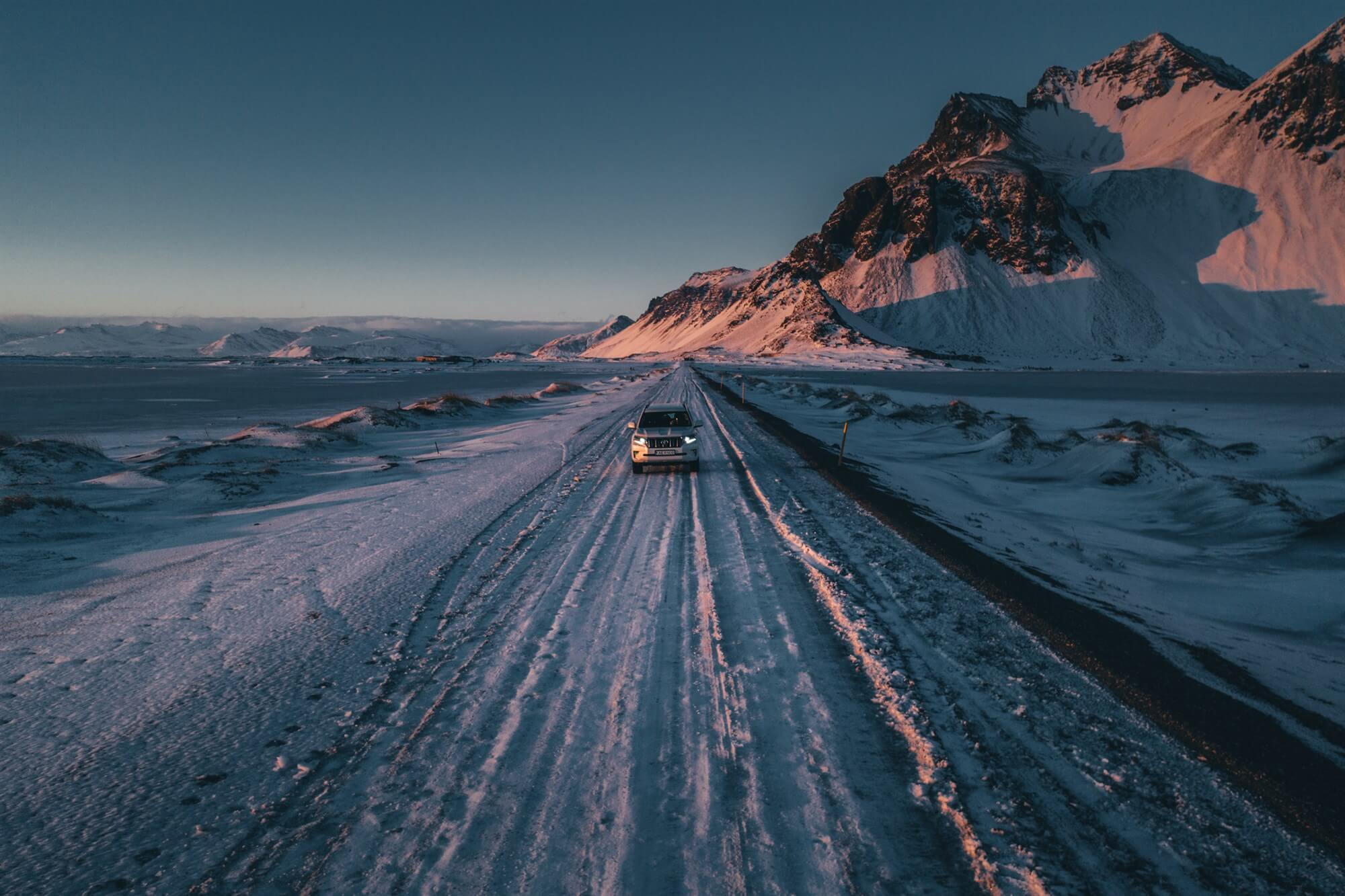
Winter conditions usually run from November to March, but snow and ice can arrive in October and linger into April, especially in the north and on mountain passes.
- Daylight: in December and January there are only around four to five hours of daylight, with long, soft twilight on either side. By March the days are much longer.
- Wind is often a bigger challenge than snow. Strong gusts can push a car sideways on open roads and tear a door out of your hand.
- Weather changes fast and varies by region. You can drive out of a snowstorm into sunshine within half an hour, and back again.
- The north, around Akureyri and Mývatn, usually gets more snow and stronger winds than the south and the capital area.
- F-roads and Highland routes are closed all winter. The Ring Road and other main roads stay open, apart from short closures during storms.
Why Rent a Car in Winter
- Freedom: chase clear skies for the northern lights, stop at frozen waterfalls and change plans when the weather changes. Tours run on fixed times and routes.
- Fewer crowds: popular stops like Reynisfjara and Kirkjufell are much quieter than in summer.
- Lower prices: rental prices are usually lower in winter than in the summer peak.
- A warm base: after a cold stop at Gullfoss or a glacier lagoon, the car is your heated shelter.
Public transport outside Reykjavík is limited, especially in winter, so a car is the practical way to reach the South Coast, the Golden Circle and beyond.
Understand Iceland's Weather Warnings
The Icelandic Met Office issues colour-coded weather warnings for each region. Learn them before you travel:
- Yellow warning: weather that can cause problems locally, such as strong wind, snow or icy roads. Travel between regions may be affected, and it can be dangerous if you are not prepared.
- Orange warning: severe weather that is likely to disrupt roads and travel for a while. There is a real risk of accidents and damage, and it can be a danger to life if precautions are not taken.
- Red warning: extreme weather that is very dangerous. Expect widespread road closures and disruption. Do not travel.
If you are not used to winter driving, do not drive under any weather warning. Wait it out in a café or at your accommodation. If safetravel.is advises against travel in an area, take that literally.
Check these every day, and again before each drive:
- en.vedur.is: forecasts and the current warnings by region
- umferdin.is: road conditions and closures. Read our guide to checking Iceland's road conditions for what the colours mean.
- safetravel.is: travel alerts. You can also leave a travel plan there before a long or remote drive.
Zero's team also keeps an eye on conditions and contacts customers who are in an area where difficult weather is coming.
Your Car in Winter
Every Zero Car rental is prepared for winter:
- Studded winter tires from 1 November to 14 April, the legal winter tire period in Iceland. Snow chains are not used. Read more about winter tires in Iceland.
- An ice scraper and washer fluid that works below freezing
- Full insurance with zero excess and 24/7 roadside assistance, included in every rental
Do you need a 4x4? For winter trips beyond Reykjavík and the main routes, a 4x4 is strongly recommended for extra grip and stability in wind. On the Ring Road and around the capital, a careful driver can manage with a 2WD car on winter tires, but plan more conservatively. Compare the options in which car to rent for a winter road trip or see our 4x4 and large SUVs.
Electric cars work in winter too, but cold weather reduces range, so plan charging stops closer together and keep a comfortable buffer. See our electric cars.

How to Drive Safely on Snow and Ice
Before you set off
- Clear all snow and ice from the windows, mirrors, lights and the roof. Snow left on the roof can slide down over the windscreen the first time you brake. Driving with iced-up windows is also not allowed.
- Start with a full tank and fill up whenever you pass a station in rural areas. If you get stuck, fuel is what keeps the car warm.
- Plan for daylight. Do your longest drives between late morning and mid-afternoon, and aim to reach your accommodation before dark.
On the road
- Slow down. The speed limit is a maximum for good conditions, not a target. The harder the wind and snow, the slower you go.
- Watch for black ice around 0 °C. Most winter accidents happen when the temperature is close to freezing. Black ice is a thin, almost invisible layer of ice on dark asphalt, often on bridges and in shaded areas. When the dashboard shows around 0 °C, slow right down.
- Do not use cruise control on snow, ice or in strong wind. You need full control of your speed at all times.
- Keep a long distance to the car in front. Stopping distance on ice is at least double that on a dry road, and often much more.
- Keep both hands on the wheel on open stretches where gusts are strong, and hold the door firmly when you get out.
- Snow ploughs work to keep the main roads open and salt them against ice. In bad weather, stay behind a plough instead of overtaking it: the road ahead has not been cleared yet.
If the car starts to skid
Stay calm. Take your feet off both the brake and the accelerator, and steer gently in the direction you want to go. Braking hard locks the wheels and makes the skid worse.
Braking on a slippery road
All Zero cars have anti-lock brakes (ABS). Press the brake firmly and keep pressing, even if the pedal vibrates. Do not pump the brake: ABS does that for you. Brake early and gently, well before bends and junctions.
Know When to Stop
If visibility drops so far that you cannot see the road or the car ahead, do not push on. Find a safe place to stop well off the road if you can, turn on your hazard lights and wait for conditions to improve. A delay of a few hours is far better than an accident or a night in a ditch.
If You Get Stuck in a Storm
- Call 112, Iceland's emergency number, if you are in danger or cannot continue. The free 112 Iceland app can also share your location with the emergency services.
- Stay in the car unless it is clearly safe to leave. The car is your shelter, and it is much easier to find than a person.
- Call Zero's 24/7 roadside assistance so we know where you are and can help.
- Keep warm: run the engine for short periods to heat the car, and keep an eye on the fuel.
- Keep the exhaust pipe clear of snow whenever the engine is running. A blocked exhaust can fill the car with carbon monoxide.
- Charge your phones while the engine runs.
- Keep doors and windows closed, and open a window slightly from time to time for fresh air.
Rescue can take hours in a big storm, so always carry a winter kit: warm, waterproof clothing for everyone, blankets, water, snacks and a power bank. See how to dress for Iceland in winter.
A Smart Winter Driving Plan
- Keep driving days short and leave at least one spare day in case a storm closes roads.
- Start driving after sunrise and reach your accommodation before dark when you can.
- Check wind forecasts before exposed coastal roads, such as parts of the South Coast and the Snæfellsnes Peninsula.
- Book accommodation that lets you change dates, or stay two nights in one place.
- On the Ring Road in winter, read our Ring Road winter driving guide. Heading north? See driving in North Iceland in winter.
Common Winter Driving Mistakes
- Underestimating the wind
- Driving too fast for icy patches
- Planning too much driving for the short days
- Ignoring weather warnings and road closures
- Setting off with a low tank in rural areas
- Opening car doors carelessly in strong wind
Northern Lights by Car
Winter is the season for the northern lights, which can usually be seen from late September to early April. You need darkness, clear skies and some solar activity. With a car, you can leave the city lights behind and drive to where the sky is clearing. Check the aurora and cloud forecasts on en.vedur.is, and never stop on the road to watch: use a parking area or safe pull-off. For routes and tips, read how to see the northern lights in Iceland by car.
Plan Your Winter Trip
For December trips, see our Christmas in Iceland self-drive guide and the winter festivals calendar. For the general rules of the road, read our guide to driving in Iceland.
Winter in Iceland asks for preparation, but it gives back something unforgettable. With full insurance and zero excess, no deposit and 24/7 roadside assistance included, a Zero Car rental lets you focus on the road ahead. Browse rental cars for your winter trip.

You can book right now
FAQ
Winter in Iceland: what to expect
Yes, driving in Iceland is safe when you prepare properly. Roads are well-maintained, and all Zero Car rentals come with studded winter tires, an ice scraper, and 24/7 roadside assistance.
For trips beyond Reykjavík and the main routes, a 4x4 is strongly recommended for extra grip and stability in wind. On the Ring Road and around the capital, a careful driver can manage with a 2WD car on winter tires, but a 4x4 gives you more margin when conditions turn.
Yes. Every vehicle is fitted with winter tires, de-icing equipment, and heating features. We also provide a complimentary ice scraper and snow brush in all cars.
Absolutely. Our electric and hybrid vehicles perform well in cold conditions and are perfect for shorter routes and city travel. See our electric cars for details.
Check updates from the Icelandic Met Office and Icelandic Road Administration. If travel warnings are issued, it’s best to wait until conditions improve — safety always comes first.
Yes. Zero Car provides 24/7 roadside assistance with every rental, ensuring help is always available if needed.